The ‘Higgs boson’ and ‘Higgs field’ concepts are not easy to grasp. The Higgs field permeates all of space and behaves somewhat like the earth’s gravitational field.
When an object is raised, in the earth’s gravitational field, it gains what is termed ‘potential’ energy, a ‘hidden’ or ‘stored’ energy that can do mechanical damage if dropped. Likewise, when certain ‘elementary particles’ of the ‘Standard Model of Particle Physics’ traverse the Higgs field, it ‘interacts’ with (affects) them and they gain ‘mass,’ which is also a form of stored energy—E=mc2 (where ‘E’ stands for energy, ‘m’ stands for mass, and ‘c’ stands for the velocity of light in a vacuum). One may think of mass as ‘weight’ on earth.
According to the CERN (Conseil Européen pour la Recherche Nucléaire—the European Council for Nuclear Research) website, https://home.web.cern.ch/science/physics/higgs-boson, “When the universe began, no particles had mass; they all sped around at the speed of light.” Wikipedia confirms this: “All fundamental particles … should be massless at very high energies [temperatures]”: https://en.wikipedia.org/wiki/Higgs_boson. So, in the early universe (i.e., at extremely high temperatures—during the first picosecond [10-12 of a second] of the Big Bang), before any interaction with the Higgs field, all fundamental particles are thought to have been massless and moving at the speed of light. As CERN explains further, “In our current description of Nature, every particle is a wave in a field. The most familiar example of this is light: light is simultaneously a wave in the electromagnetic field and a stream of particles called photons.”
[Note: In our universe, every physical entity exhibits itself ‘dually,’ that is, both as a ‘particle’ and as a ‘wave’—or oscillation. For example, light normally consists of waves, but it also behaves as a ‘quantum’ or a ‘packet’ of indivisible energy termed a photon. That’s why in photography dark rooms, red light, no matter how bright or for how long it is left on, does not develop a black-and-white (as well as the less-sensitive color) photographic film: it’s energy (E=hf, where ‘h’ is Planck’s constant and ‘f’ is the frequency) is insufficient to exceed a certain threshold because the red light frequency is too low. The physical phenomenon involved, in this particular case, is termed the photoelectric effect. In my article “Free Will and Predestination,” under “Quantum Physics (Quantum Mechanics),” I explain, in more detail, this duality of light.]
As the universe expanded and cooled down, several of these fundamental particles started interacting, to different extents, with the Higgs field: specifically, it interacts with particles that end up with a non-zero mass, including: ‘quarks’ (which form protons & neutrons), ‘leptons’ (particles like the electron & neutrino), and ‘W & Z bosons’ (which mediate the ‘weak nuclear force’ inside atoms). Indeed, the Higgs particle does not interact at all with massless particles, such as photons (like light) or gluons (which mediate the ‘strong nuclear force’ inside atoms).
Now, the Higgs boson is the ‘excitation’ of the Higgs field: somewhat like a drop of water forming inside steam. The Higgs boson is very unstable, decaying into other particles almost immediately upon generation—in about 1.6×10⁻²² of a second. The Higgs field uses the Higgs boson intermediately to interact with ‘non-zero-mass’ elementary particles giving them mass.
In https://www.fnal.gov/pub/science/inquiring/questions/higgs_boson.html, the Fermilab website, explains, “The Higgs boson is a particle. It gets its mass like all other particles: by interacting with (‘swimming in’) the Higgs field. But as you can imagine, the Higgs particle differs from all the other particles we know. It can be thought of a dense spot in the Higgs field, which can travel like any other particle: like a drop of water in water vapor. … The Higgs particle, like many other elementary particles, is not a stable particle. Since it interacts with all kinds of other massive particles it can be created in collisions. Once the Higgs particle has been created, it will eventually decay.” And according to CERN, “The Higgs boson can’t be ‘discovered’ by finding it somewhere but has to be created in a particle collision. Once created, it transforms—or ‘decays’ into other particles that can be detected in particle detectors.”
Technical Information:
The discovery of the Higgs boson on July 4, 2012, through the Large Hadron Collider at CERN near Geneva, Switzerland (on the Franco-Swiss border) provided strong evidence for the existence of the Higgs field and the mechanism it provides for ‘creating’ particle mass. As mentioned, the Higgs field interacts with and gives mass to many elementary sub-atomic particles. The ‘Brout-Englert-Higgs mechanism’ explains how these particles acquire their mass through this interaction. The Higgs boson, when very rarely formed in the Large Hadron Collider (about once in a billion collisions, according to CERN), disintegrates into other ‘elementary particles’ in a small fraction (1.6×10⁻²²) of a second. The formation of Higgs bosons is only evidence that a Higgs field really exists.
How certain are physicists that they discovered the Higgs boson since it only lasts for a fleeting moment before it decays and they can’t possibly examine it at their leisure? They’re not 100% sure, but they are better than 99.9999% sure. In the case of the Higgs boson, physicists passed the so-called threshold of ‘five-sigma.’ A 5-sigma result (or finding) signifies a very high level of statistical certainty: there’s a very small chance that the observed data is due to random fluctuations rather than a real phenomenon: specifically, a 5-sigma result indicates about a one-in-a-million chance that the findings are merely a statistical fluke. A 5-sigma certainty corresponds to a confidence level of approximately 99.99994%.
Despite Fermilab’s equating mass to drag: “The Higgs field … just causes a ‘drag’ = mass,” I must agree with Wikipedia’s stating, “Analogies based on the resistance of macroscopic objects moving through media (such as … objects moving through syrup or molasses) are commonly used but misleading, since the Higgs field does not actually resist particles, and the effect of mass is not caused by resistance.”
Consequently, I think we can best compare the Higgs field with the earth’s gravitational field (if we neglect air friction). All the initial ‘kinetic’ (motion) energy of a ball thrown upward is converted to ‘potential’ (stored) energy at its highest point. The ‘mass’ (otherwise known as ‘matter’) gained in a Higgs field is roughly comparable to the potential energy gained in the earth’s gravitational field when an object is raised. Wikipedia confirms this: “In Higgs-based theories, the property of ‘mass’ is a manifestation of potential energy transferred to fundamental particles when they interact (‘couple’) with the Higgs field.” There’s no question that, though massless, light photons do carry energy (E=hf=pc, where ‘p’ is the momentum, and ‘c’ is the velocity of light) from the sun to the earth.
Like the earth’s gravitational field, the Higgs field is a ‘scalar’ field. Unlike an electrical or magnetic field, the earth’s gravitational field is independent of direction: its ‘potential’ is only dependent on position above earth. The Higgs field, however, has a potential shaped like a ‘sombrero’ or ‘Mexican hat: it has a characteristic shape resembling a wide-brimmed hat. The ‘brim’ (valley) of the hat represents the stable, lowest energy state of the Higgs field, while the ‘top’ of the hat (around the center) is a higher energy state. When an elementary particle interacts with the Higgs field, it ‘overshoots’ the top and settles inside the brim.
Creation from Nothingness:
CERN asks, “Does [the Higgs boson] help to explain how the universe was formed?” The fact that the Higgs field (through the Higgs boson) gives mass to several subatomic particles (thus seemingly ‘creating’ matter) prompted popular media to nickname the Higgs boson as the ‘God Particle.’ Is the Higgs field or the Higgs boson the answer to creation ex nihilo (from ‘nothingness’)? Not really, for it begs the question: how did the Higgs field come about in the first place? Not to mention the prior existence of the massless elementary particles. These elementary particles, although massless (like photons that reach us from the sun) are not devoid of energy; and energy cannot be created or destroyed in our universe: it can only change form.
For those readers who might be interested in buying any of my books, following are the publisher’s (iUniverse’s) links. If you find the hard copies expensive, the soft copies are only US$3.99 each. Should you decide to buy any of my books, kindly also remember to leave a review after reading it (2 or 3 sentences would do).
Abortion is one of the most controversial subjects. However, in this article, I shall show that the pro-choice argument is rather shallow and somewhat irresponsible.
Justification:
In my opinion, abortion is never justified, except when the mother’s life is seriously threatened: a choice of a life for a life. In that case, I believe, God is giving the individual a choice, and I’d choose the mother’s life for the sake of the entire family, not to mention love.
As a parallel scenario, if two of your children are drowning, and you figure you can only save one of them, there’s no time to think: you just save the one that’s easier to save and hope for the best for the other. You don’t just sit there and wait for nature to cause the death of one of them: you have to take responsibility and act quickly.
Choice:
Most pro-abortionists argue it’s the woman’s body that’s involved, and therefore only she has the right to continue with her pregnancy or not. Normally, this is the case: for example, in the case of an operation or cancer treatment, she has the right to choose to go ahead or not. However, notice that in such cases, only the woman is involved.
In the case of abortion, it’s different because it involves another ‘person.’ There is no such thing as ‘choice’ when it involves killing or even hurting another person, except in the case of self-defence.
In his book Heresy: Ten Lies They Spread about Christianity, columnist, author, and former radio and television talk-show host Michael Coren explains, “The choice to kill, rape, hurt and harm, steal, and libel are not considered choices but crimes. … So the choice to kill an unborn baby simply because you have the power to do so, for whatever reason, is not really a choice in any meaningful sense, but an action currently supported by law and custom, not in any way connected with what we would otherwise define as choice.” (p.195)
According to the Catechism of the Catholic Church, “Human life must be respected and protected absolutely from the moment of conception. From the first moment of his existence, a human being must be recognized as having the rights of a person—among which is the inviolable right of every innocent being to life.” (¶ 2270, p. 464) I must say I totally agree with the Catholic Church, here.
Aquinas & Augustine:
However, the Catholic Catechism continues, “Since the first century the Church has affirmed the moral evil of every procured abortion. This teaching has not changed and remains unchangeable.” (¶ 2271, p. 465) In the interest of fairness to pro-abortionists, I must say this sounds more like a blatant lie.
As I paraphrase Catholic Church historian Garry Wills in my book, Faith and Reason: Disturbing Christian Doctrines (pp. 420–21), “Thirteenth century Christian doctor of the Church, theologian, and philosopher Thomas Aquinas opposed the baptism of fetuses and things have not changed since (Wills, Papal Sin, pp. 222, 227). Aquinas, following Aristotle, opined that the human goes through three stages: (1) the nutritive soul, which plants have, (2) the sentient soul, characteristic of animals, and (3) the rational soul, possessed by humans (Wills, Papal Sin, p. 225). Also fourth-fifth-century Christian doctor of the Church, theologian, and philosopher Augustine of Hippo was uncertain at what stage God infuses the soul into the human fetus and when the soul contracts original sin (Wills, Papal Sin, pp. 226, 227, 229).”
So why don’t I agree that disposing of an embryo in the nutrient stage (as we might do away with a plant) is not murder as well as in the sentient stage (as we might take the life of an animal)? If one were to go by this hypothesis, a newborn baby hasn’t reached the age of reason, yet, and may take a year, or so. By the same argument, then, newborn babies may be done away with, without committing murder, up to a year, say, after birth.
Contraception:
This brings us to the question of whether using contraceptive devices is morally acceptable or not. According to the Catechism of the Catholic Church, “‘Every action which, whether in anticipation of the conjugal act, or in its accomplishment, or in the development of its natural consequences, proposes, whether as an end or as a means, to render procreation impossible’ is intrinsically evil.” (¶ 2370, p. 483)
Here, I must disagree with the Catholic Church: as long as the methods used are ‘non-abortive,’ the discarding of semen is not evil; indeed, if a man abstains from intercourse and masturbation for a while, he will have a nocturnal emission in which semen is discarded profusely. Consequently, the use of a condom during intercourse or the use of a non-abortive pill, such as the one that prevents ovulation, are not evil. No person is conceived in such cases. There are millions of sperms in a single ejaculate, and only one fertilizes the ovum; the rest are discarded: that doesn’t mean one is killing millions of human lives.
I know it sounds like splitting hairs, but anything we do we must carry out ethically: the end does not justify the means. For example, if you want people to convert to your religion because you honestly believe it’s the true religion, you cannot force them to do so; you can only try to convince them. It’s not easy to always conform to this principle: even Augustine made such a mistake when he proposed forced conversions lest non-Christians perish in hell eternally.
The Bible:
Since it believes the Bible is God’s word, the Church is supposed to follow the Bible in declaring moral conduct; but there’s nothing in the Bible that condemns contraception. There is, however, one story, Onan’s, that the Church has repeatedly used to condemn contraception.
Onan’s account goes as follows: “Judah [the 4th son of Jacob] took a wife for Er his firstborn, whose name was Tamar. And Er, Judah’s firstborn, was wicked in the sight of the Lord; and the Lord slew him. And Judah said unto Onan [his 2nd son], ‘Go in unto thy brother’s wife, and marry her, and raise up seed [children] to thy brother.’ And Onan knew that the seed should not be his; and it came to pass, when he went in unto his brother’s wife, that he spilled it [the ejaculate] on the ground, lest that he should give seed to his brother. And the thing which he did displeased the Lord: wherefore he slew him also.” (Genesis 38:6–10, KJV)
The above ‘marriage’ is termed a ‘levirate marriage’; the Latin word levir means ‘husband’s brother’ or brother-in-law. According to the Old Testament, a man was forbidden from having intercourse with his sister-in-law; we read, “Thou shalt not uncover the nakedness of [have intercourse with (NAB)] thy brother’s wife.” (Leviticus 18:16, KJV) However, since in the old days women practically had no rights, in the case of the premature death of the male of the family, who still had no sons, his brother’s duty was to give male children to the widow: so that her inheritance is not lost (Deuteronomy 25:5–10).
Admittedly, interrupted intercourse or, in Latin, coitus interruptus (in which the man exits the woman’s vagina just prior to ejaculation) is a form of non-abortive contraception.
However, according to Wikipedia, “The biblical story of Onan (Genesis 38) is traditionally linked to referring to masturbation [& contraception] and condemnation thereof. A number of scholars have pointed out that the sexual act described by this story is coitus interruptus, not masturbation. Some go further and argue that Onan’s death was solely due to his refusal to fulfill the obligation of levirate marriage, rather than any sexual sin. … The story was written by a ‘prescientific mind’ that considered the child to be contained in the sperm the same way a plant is contained in its seed. Onan’s offense was therefore [seemingly] the deliberate destruction of human life.”
In other words, the woman’s role was thought to be only as the ground where seed is planted. This might explain why men, in the old days, were somewhat reluctant to spill their semen outside a woman’s vagina. And this is also probably why we have a paternal, rather than a maternal, society; despite the obvious fact that it’s much easier to track the mother of a child than the father.
Moreover, in his book Catholic Q & A: Answers to the Most Common Questions about Catholicism (p.263), foremost Catholic question-and-answer columnist John J. Dietzen writes, “The [Onan] passage has often been wrongly interpreted as an explicit condemnation of contraception, and even more of masturbation. It is commonly acknowledged, however, that not the ‘wasting of the seed,’ but the refusal to observe a most serious family and tribal law was primarily responsible for Onan’s condemnation and punishment.” (emphasis mine)
Furthermore, Wills agrees with Dietzen that this passage is majorly problematic regarding contraception; he writes, “Modern scholars universally agree that what is condemned in the Onan passage is not contraception considered in itself (there is no direct condemnation of that in all the detailed provisions of Jewish law), but the deprivation of a brother’s line of its proper heir.” (Wills, Papal Sin, p. 78, emphasis mine)
In other words, this passage is cited erroneously—out of context with regard to contraception. In fact, the citing of this passage in documents concerning contraception was dropped in the 1968 encyclical Humanae Vitae (Latin for “Of Human Life”) and later papal documents.
As Wills points out above, it’s quite clear that the Bible does not really condemn the spilling of male semen, as such, because in Leviticus, which contains detailed instructions on moral behavior, we only read, “If any man’s seed of copulation go out from him [through nocturnal emission], then he shall wash all his flesh in water, and be unclean until the even [evening (NAB)]. And every garment, and every skin, whereon is the seed of copulation, shall be washed with water, and be unclean until the even. The woman also with whom man shall lie with seed of copulation [have intercourse], they shall both bathe themselves in water, and be unclean until the even.” (Leviticus 15:16–18, KJV)
So, according to Leviticus, the spilling of semen only causes ritual uncleanness for a day. This is the worst case scenario; that is, if one believes that the Bible is God’s word. If, like me, one believes the Bible is a sage but human book, then one has to resort to one’s own reason, which even Bible inerrantists believe is given us in God’s ‘image’ (Genesis 1:26–27).
Rape:
A difficult case arises when a woman is raped and therefore might conceive involuntarily. Does she have a right to abort the unborn at any time? Unfortunately, again my answer is no. There are many situations in life that are far from ideal, but we still have to deal with them by doing the right thing under the circumstances. The unborn zygote, embryo, or fetus is totally innocent, and one cannot possibly reproduce that same ‘person’ again. This, practically, amounts to killing that person.
Naturally, the rape victim should be given all the support and financial help of one’s family (especially in the case of a minor) and of the government; and she should also be given the right to give up the child, when born, for adoption.
Person?
Pro-abortionists argue that an unborn fetus is not a ‘person’; it’s like a tumor, they say, which one has a right to have removed, or an arm, which one has a right to amputate.
Indeed, according to The Lancet, in Canada, “A fetus does not have the independent legal rights of a human being until it has completely emerged from the womb, a provincial court judge re-asserted … in dismissing an attempted murder charge against a woman who shot her near-term fetus in the brain with a pellet gun. … [Brenda] Drummond inserted a pellet gun in her vagina and shot the fetus in the brain 2 days before she gave birth.”
So, hypothetically, if someone shoots and kills an eight-month-old fetus of a pregnant woman, one cannot be charged for murdering her unborn child; one can only be charged for aggravated assault on the woman, say. I wonder what the mother-to-be would think about that.
We have laws against age discrimination: likewise, we should have no age-discrimination for the unborn. All this confusion stems from the false concept that the yet-unborn is not a person. Nonsense! A zygote is the same person as a one-month-old embryo, an eight-month-old fetus, and a newborn baby.
Conclusion:
I’m a man, and naturally, I don’t really know how a woman feels. Indeed, I must confess most women I know disagree with me on this matter. On the other hand, I think it’s best not to be emotionally involved in a problem to make the right decision.
Postscript:
As always on my website, discussion on this very controversial subject is most welcome. I promise I shall respond to all. I would also appreciate your voting “Like” if you do like this article.
References:
Attard, Carmel Paul. Faith and Reason: Disturbing Christian Doctrines. Bloomington, IN, iUniverse, 2020. (ISBN: 9781663210937)
Coren, Michael. Heresy: Ten Lies They Spread about Christianity. Toronto, Ontario, McClelland & Stewart Ltd., Toronto, ON. (ISBN: 9780771023156)
Dietzen, John J. Catholic Q & A: Answers to the Most Common Questions About Catholicism. New York, NY: The Crossroad Publishing Company, 2005. (ISBN: 0824523091)
Libreria Editrice Vaticana. Catechism of the Catholic Church. Translated by Concacan Inc. Ottawa, ON: Publications Services, Canadian Conference of Catholic Bishops, 1994. (ISBN: 0889972818)
New American Bible: Revised Edition (NAB). Translated from the original languages, authorized by the Confraternity of Christian Doctrine, and approved by the United States Confraternity of Catholic Bishops. Totowa, NJ: Catholic Book Publishing Corp., 2010. (ISBN: 9780899429519)
The Holy Bible: King James Version (KJV). Oxford, UK, 1769.
Wills, Garry. Papal Sin: Structures of Deceit. New York, NY, Image (Doubleday a division of Random House Inc.), 2000. (ISBN: 0385494114)
Author’s Books
For those readers who might be interested in buying any of my books, following are the publisher’s (iUniverse’s) links. If you find the hard copies expensive, the soft copies are only US$3.99 each. Should you decide to buy any of my books, kindly also remember to leave a review after reading it (2 or 3 sentences would do).
Does God have a master plan for the whole world? Are we just disposable pawns in this master plan? Must we always do God’s will to be happy? This article tries to answer these questions.
The Gospels
In Matthew’s gospel (written in the 80s CE), we read, “Our Father which art in heaven, hallowed be thy name. Thy kingdom come, Thy will be done in earth, as it is in heaven.” (Matthew 6:9–10, KJV, emphasis mine) Interestingly, according to the ‘New American Bible,’ in Luke’s gospel (written in the 90s CE), we don’t read the same thing: “Father, hallowed be your name, your kingdom come.” (Luke 11:2, NAB) Notice that according to the ‘New American Bible’ (NAB), the clause “thy will be done” is missing in Luke’s gospel. We do find the clause in the ‘King James Version’ (KJV), but it seems to be a copyist’s addition (a gloss). We find this clause in only 9 out of 32 English translations: https://biblehub.com/luke/11-2.htm.
[Note: According to ‘Wikipedia,’ the ‘New American Bible’ (NAB) translation “was carried out in stages by members of the ‘Catholic Biblical Association of America’ (CBA).” (Wikipedia: “New American Bible,” accessed April 9, 2024) “[CBA] Membership now numbers more than 1,200. Those who hold an advanced degree in biblical studies are eligible to be elected to membership, irrespective of any religious affiliation.” (Wikipedia: “Catholic Biblical Association,” accessed April 9, 2024) I’d like to point out, therefore, that the ‘New American Bible’ isn’t just the opinion of a single or a handful of biblical scholars: indeed, “over 50 [biblical] scholars” were assigned to its translation: https://www.amazon.ca/Catholic-Student-Bible-NABRE-World-Press/dp/0529064847.]
Moreover, surprisingly, we don’t even find the Lord’s Prayer in Mark’s gospel (written in the 70s CE), which both Matthew and Luke used as a skeleton for their gospels—thus constituting the three ‘synoptic gospels.’ The point I’m trying to make, here, is that the clause “thy will be done” does not seem to be an original petition of Jesus: it seems to be an addition by the evangelist Matthew; and later added to Luke’s gospel by Christian copyists.
Doctrine
In the original Baltimore Catechism of 1885, we read, “Why did God make you? God made me to know Him, to love Him, and to serve Him in this world, and to be happy with Him forever in the next.” (Q. 6, emphasis mine) Notice the concept of servitude toward God. However, good parents don’t give birth to children so they themselves may be served: they give birth to children so the latter may have a life of their own. It’s the devil who is a user, not God.
Somewhat surprisingly, in the Catechism of the Catholic Church of 1994, the concept of servitude toward God is aptly deleted; we read, “God calls man to seek him, to know him, to love him with all his strength.” (p. 11, ¶ 1)
God’s Invitation
In his fantastic book The Misunderstood God, former pastor, homeless outreach director, and relationships speaker, Darin Hufford, opines that religion often portrays God with the personality of the devil: the subtitle of this book is The Lies Religion Tells about God. He writes several times, “We have been lied to about God.” (e.g., pp. 7, 10)
Of course, there’s nothing wrong with serving God, but only if one so wishes. We may live our life entirely without him, and he wouldn’t hold a grudge; he’s more of a ‘gentleman’ than that. He doesn’t really need our friendship, but he wishes every one of us to have a personal relationship with him. So, one shouldn’t be too obsessed with serving God all the time: there’s nothing wrong with solely serving loved ones and leaving some space for oneself to have some fun in life, as well. God gave us life as a gift, with no strings attached: to enjoy it any way we want, and not for his own sake, nor for the sake of others.
At the other end of the spectrum, however, life becomes somewhat empty without a meaningful relationship with someone: that is, catering only for oneself. Thus, in the depth of our being, God planted a seed encouraging us to live our life responsibly and even altruistically. “All things whatsoever ye would that men should do to you, do ye even so to them.” (Matthew 7:12, KJV; see also Luke 6:31) When we love others, we automatically love God because “God is love. … If a man say, I love God, and hateth his brother, he is a liar.” (1 John 4:16, 20 KJV)
Master Plan
Many Christians believe that “everything happens for a reason”: that God is continually using us to achieve his master plan for the future of the whole world, and no matter what we do, we cannot derail his plan. This is ludicrous since many awful things happen because of our evil inclinations, and many things happen by chance—like the lottery, or the throw of a dice.
Christianity teaches that God always has his way: that he apparently has this super plan not only for every individual but also for the whole world that will not be thwarted by any means or by anyone. The Church teaches us that we are basically God’s mindless slaves; that it’s better for us to do his will voluntarily, or else he would break our spirit. Moreover, the Church teaches us that we should worship and praise God constantly, lest he forgets his greatness, I surmise. If worship is not heartfelt, it’s fake: we would be better off not doing it at all; God can see through us. Hufford compares it to the wife who has sex reluctantly with her husband (p.72).
Occasionally, one might be moved by God’s unconditional love for us, the beauty and balance of nature, or his design abilities in his creations; but not all the time. Also, trying to sell to others God’s greatness, without really feeling it deep inside our being, is false advertising—that’s not loving him. God is not after our fearful or servient admiration: he is after our heart (p. 76).
Whenever we seek God with all our heart, he will listen to us, he will let us ‘find’ him, and he might even change our lot, but only if he foresees that it would make us better versions of ourselves: “When you call me [God], and come and pray to me, I will listen to you. When you look for me, you will find me. Yes, when you seek me with all your heart, I will let you find me… and I will change your lot.” (Jeremiah 29:12–14, NAB)
Our Choice
Hufford then gives us one of the most beautiful portraits of God. He contends that if you were to ask God what he wants from you, he will probably answer that he doesn’t really know; he will simply ask you back what you would like to do (p. 102). I must admit I never thought of it that way before I read Hufford’s book: I always thought God knew everything beforehand. Maybe, God doesn’t really know our future after all! If he did, where does our free will fit in? (See my article on “Free Will & Predestination.”)
In fact, we don’t have any tangible evidence of God’s ever being able to foretell the future—not even from biblical accounts, as I show in my two articles on “Bible Prophecies” (Textual & Claimed). While he possibly knows what will make us better individuals, he lets us find our own way; he would not dictate nor suggest which way we should take: he lets us make our own decisions. However, if we have an intimate personal relationship with him, we will probably see things in a new light.
Jesus
Some might object, here, pointing out that Jesus always did his Father’s will, and that, as Christians, we should imitate him. It’s worthwhile looking into this objection. However, Jesus is an exceptional case. We must keep in mind that Jesus had a mission; he knew it because, in all probability, his mother, Mary, must have told him of his miraculous conception by the Holy Spirit (see my article on “Mary’s Virginity”). He accepted this mission willingly; it wasn’t imposed on him by God, he researched it in Scriptures, as I show in the following paragraph.
In Luke’s gospel, we read, “He [Jesus] came to Nazareth, where he had been brought up: and, as his custom was, he went into the synagogue on the Sabbath day, and stood up for to read. And there was delivered unto him the book of the prophet Esaias [Isaiah]. And when he had opened the book, he found the place where it was written, ‘The Spirit of the Lord is upon me, because he hath anointed me to preach the gospel to the poor; he hath sent me to heal the broken-hearted, to preach deliverance to the captives, and recovering of sight to the blind, to set at liberty them that are bruised, to preach the acceptable year of the Lord.’ And he closed the book, and he gave it again to the minister, and sat down. And the eyes of all them that were in the synagogue were fastened on him. And he began to say unto them, ‘This day is this scripture fulfilled in your ears.’” (Luke 4:16–21, KJV) Then, in Matthew’s gospel, we read, “Jesus answered and said unto them [John the Baptist’s disciples], ‘Go and shew John [the Baptist] again those things which ye do hear and see: The blind receive their sight, and the lame walk, the lepers are cleansed, and the deaf hear, the dead are raised up, and the poor have the gospel preached to them. And blessed is he, whosoever shall not be offended in [shocked by] me.’” (Matthew 11:4–6, KJV)
I don’t want the reader to get me wrong, here; there’s nothing wrong in following, voluntarily, what one feels is a ‘divine’ calling—like the priesthood or a missionary calling—the same way one follows a medical, legal, or teaching profession. My point is that one doesn’t have to become unduly concerned or obsessed in trying to find what God’s will is for one’s life: fearing that otherwise one would experience a miserable life.
In Jesus’s case, God conceived Jesus to show us his love in human terms: a love that’s ready to die for others—provided Jesus agreed to go along, of course. During Jesus’s agony in the garden, we read, “He [Jesus] was withdrawn from them [his disciples] about a stone’s cast, and kneeled down, and prayed, saying, ‘Father, if thou be willing, remove this cup from me: nevertheless not my will, but thine, be done.’” (Luke 22:41–42, KJV; see also Matthew 26:39, 42, 44; Mark 14:36 & John 12:27, 28) Naturally, Jesus was scared of his impending crucifixion, but God wanted to endorse Jesus in a special manner: in other words, in order to leave no doubt regarding his eventual resurrection, Jesus had to die a public death. This is probably what the consoling angel told Jesus: “And there appeared an angel unto him from heaven, strengthening him.” (Luke 22:43, KJV)
Christ’s Teaching
“I [Jesus] am come that they [we] might have life, and that they might have it more abundantly.” (John 10:10, KJV) Jesus condemns his contemporary Pharisees’ and Sadducees’ numerous rules and regulations (much like modern Church hierarchy): “Woe unto you also, ye lawyers! For ye lade [load] men with burdens grievous to be borne, and ye yourselves touch not the burdens with one of your fingers” (Luke 11:46, KJV) So he tells us, “Come unto me [Jesus], all ye that labour and are heavy laden, and I will give you rest. Take my yoke upon you, and learn of me; for I am meek and lowly in heart: and ye shall find rest unto your souls. For my yoke is easy, and my burden is light.” (Matthew 11:28–30, KJV) Jesus simply asks us to take on the everyday challenges of life calmly and gladly: “Take therefore no thought for the morrow: for the morrow shall take thought for the things of itself. Sufficient unto the day is the evil [trouble] thereof.” (Matthew 6:34, KJV) So don’t fret too much about the future: remember, we get life one breath at a time!
Conclusion
Relax and enjoy life responsibly and altruistically; and if you feel you want a personal, fearless relationship with God, so much the better.
De Concilio, Januarius. Baltimore Catechism: A Catechism of Christian Doctrine, Prepared and Enjoined by Order of the Third Council of Baltimore. Baltimore, MD, 1885.
Hufford, Darin. The Misunderstood God: The Lies Religion Tells about God. Newbury Park, CA: Windblown Media, 2009. (ISBN: 9781935170051)
Libreria Editrice Vaticana. Catechism of the Catholic Church. Translated by Concacan Inc. Ottawa, ON: Publications Services, Canadian Conference of Catholic Bishops, 1994. (ISBN: 0889972818)
New American Bible: Revised Edition. Translated from the original languages, authorized by the Confraternity of Christian Doctrine, and approved by the United States Confraternity of Catholic Bishops. Totowa, NJ: Catholic Book Publishing Corp., 2010. (ISBN: 9780899429519)
The Holy Bible: King James Version. Oxford, UK, 1769.
For those readers who might be interested in buying any of my books, following are the publisher’s (iUniverse’s) links. If you find the hard copies expensive, the soft copies are only US$3.99 each. Should you decide to buy any of my books, kindly also remember to leave a review after reading it (2 or 3 sentences would do).
Christians and Jews have two commandments that start with the subject clause: “Thou shalt not covet thy neighbor’s wife” and “Thou shalt not covet thy neighbor’s goods.” Is it sinful to desire what your neighbor can afford but you can’t? Is it a sin to be attracted to your neighbor’s spouse? This article tries to answer these two questions: doubts, I found, haunting many a Christian.
Desiring versus Coveting
Let us first look at the exact meaning of the verb ‘covet.’ According to the ‘Merriam-Webster’s Collegiate Dictionary’ (eleventh edition), to ‘covet’ is to “wish for earnestly … desire (what belongs to another) inordinately or culpably … feel inordinate desire for what belongs to another.” So the verb ‘covet’ is much stronger than the verb ‘desire.’ To covet is not only to desire but also to do something about it: notice the word “culpably” which might even imply criminal activity.
Temptation versus Sin
We must also distinguish between ‘temptation’ and ‘sin.’ Temptation is an occasion or situation enticing us to sin; sin occurs when we give in to it. Even Jesus was tempted by the devil (Luke 4:1–12), but he didn’t succumb to it. Keep in mind, therefore, that temptation is not a sin. In fact, whenever we overcome temptation, that’s a bonus: it strengthens our character.
Thou Shalt Not Covet Thy Neighbor’s Goods
Let me first deal with this commandment since it’s easier. If you see that your neighbor has a high-end car while you only have a rundown car that takes you from A to B, you might say to yourself, “I wish I had his/her car.” If you do nothing harmful about it, especially if you don’t feel envious, you’ve done nothing wrong. Even if you do feel envious; envy is a perfectly natural feeling encouraging us to better ourselves—but through honest means.
Even legal means might be unacceptable in God’s eyes. For example, if someone has a property and you try to misappropriate him/her of it legally, whether you’re successful or not, you’re guilty of breaking this commandment: you’re hurting your neighbor.
Thou Shalt Not Covet Thy Neighbor’s Wife
This commandment is a little bit trickier than the previous one, but by drawing some parallels we shall see where the dividing line between sin and no sin is. It’s natural to be sexually attracted to your neighbor’s wife especially if she is extremely beautiful: you might even desire her, but you don’t do anything about it. Is that a sin? No! As long as you don’t try anything to seduce her, you’re not guilty of any sin; indeed, you are commendable in God’s eyes because you’ve overcome temptation. (Would you like it if your neighbor didn’t find your wife beautiful and attractive?) However, if you try anything to seduce your neighbor’s wife (whether you’re successful or not) you’re guilty of breaking this commandment. Needless to mention, of course, the same rules apply for a woman trying to seduce her neighbor’s husband.
Scriptures
But what if one fantasizes about a person of the opposite sex? Matthew’s gospel portrays Jesus saying, “Whosoever looketh on a woman to lust after her hath committed adultery with her already in his heart.” (Matthew 5:28, KJV) Despite what the evangelist Matthew (or Jesus) says, in my opinion, if you fantasize about driving your neighbor’s high-end car, you haven’t done anything wrong; likewise, fantasizing about your next-door-neighbor’s wife. However, it’s not a good idea to do so because sin starts with desire: so you’re setting yourself up for an eventual fall. As I argue in my article on ‘Masturbation’ (https://faith-or-reason.com/2023/02/07/masturbation/) under “Ogling,” one must interpret this verse in its proper context. In the very next couple of verses, Matthew also portrays Jesus saying, “If thy right eye offend thee, pluck it out, and cast it from thee: for it is profitable for thee that one of thy members should perish, and not that thy whole body should be cast into hell [Gehenna (NAB)]. And if thy right hand offend thee, cut it off, and cast it from thee: for it is profitable for thee that one of thy members should perish, and not that thy whole body should be cast into hell [Gehenna (NAB)].” (Matthew 5:29–30, JKV) Nobody takes these verses literally. Why not? Jesus thought that the ‘kingdom of God’ would be in full bloom on this earth within his generation (see Matthew 24:34, Mark 13:30 & Luke 21:32). He believed the coming of God’s kingdom would entail a new world order where everything would be perfect, and God would reign supreme in our heart.
Indeed, in his book ‘Papal Sin: Structures of Deceit,’ author, journalist, political philosopher, and Catholic Church historian Garry Wills explains, “These passages belong to that body of sayings that proclaims a transvaluation of all values at the arrival of the reign (basileia) of God [the ‘kingdom of God’]. Thus we hear of a disciple having to hate his father and mother (Luke 14:26). … We hear you must give a bandit the things he forgot to ask for (Luke 6:29). … Unless Jesus was talking here about a clean break with the past order in provocative symbols, he was talking nonsense.” (Papal Sin, p. 127)
Conclusion
As long as we don’t try to misappropriate or hurt our neighbor in any way, treating our neighbor as we would like to be treated, there’s nothing to worry about.
New American Bible: Revised Edition. (NAB) Translated from the original languages, authorized by the Confraternity of Christian Doctrine, and approved by the United States Confraternity of Catholic Bishops. Totowa, NJ: Catholic Book Publishing Corp., 2010. (ISBN: 9780899429519)
The Holy Bible: King James Version. (KJV) Oxford, UK, 1769.
Wills, Garry. Papal Sin: Structures of Deceit. New York, NY. Image Books, 2001. (ISBN: 0385494114)
Author’s Books
For those readers who might be interested in buying any of my books, following are the publisher’s (iUniverse’s) links. If you find the hard copies expensive, the soft copies are only US$3.99 each. Should you decide to buy any of my books, kindly also remember to leave a review after reading it (2 or 3 sentences would do).
Christmas is a yearly Christian celebration commemorating Jesus’s birth. Reading the various New Testament accounts, one notices not only textual contradictions (see ‘Flight into Egypt’ in my article ‘Bible Contradictions (New Testament)’) but also scientific and historical anomalies that I’d like to share with the reader of this article.
The ‘star,’ claimed by the evangelist Matthew to have led the Magi to Jesus, seems to be no more than a contemporaneous folklore myth, and the ‘census,’ claimed by the evangelist Luke to have triggering Joseph’s and Mary’s journey from Nazareth to Bethlehem, doesn’t seem to have ever happened historically. So, in this article I show that, unfortunately, there’s not much truth left to our Christmas stories!
I shall not cheat: I shall only quote the New Testament itself and biblical scholars to show this—biblical anomalies/discrepancies/details most believers fail to notice. I’m not trying to undermine Christmas: I actually love Christmas; I’m simply looking for the truth because I truly believe that God is always on truth’s side—no matter what.
Matthew’s Gospel
In Matthew’s gospel, we read of a ‘star’ that led the ‘wise men’ to new-born baby Jesus:
“When Jesus was born in Bethlehem of Judaea [Judah] in the days of Herod the king, behold, there came wise men from the east to Jerusalem, saying, ‘Where is he that is born King of the Jews? For we have seen his star in the east, and are come to worship him.’ … When they had heard the king, they departed; and, lo, the star, which they saw in the east, went before them, till it came and stood over where the young child was. … And when they were come into the house, they saw the young child with Mary his mother, and fell down, and worshipped him” (Matthew 2:1–2, 9, 11, KJV, emphasis mine)
The New American Bible comments on the phrase “his star” as follows: “It was a common ancient belief that a new star appeared at the time of a ruler’s birth.” (NAB, Matthew 2:2n)
[Note: According to ‘Wikipedia,’ the ‘New American Bible’ (NAB) translation “was carried out in stages by members of the ‘Catholic Biblical Association of America’ (CBA)” (Wikipedia s.v. “New American Bible,” accessed December 19, 2023) “Membership now numbers more than 1,200. Those who hold an advanced degree in biblical studies are eligible to be elected to membership, irrespective of any religious affiliation.” (Wikipedia s.v. “Catholic Biblical Association,” accessed December 19, 2023) I’d like to point out, therefore, that the ‘New American Bible’ isn’t just the opinion of a single or a handful of biblical scholars. It also advertises the book, “This modern translation was prepared by over 50 scholars.”]
Incidentally notice that the star allegedly indicated a “house,” not a cave or an animal barn, as portrayed in Christmas cards. My guess, their home was in Nazareth, not in Bethlehem.
Besides, a star is light-years away (1 light-year ~ 10 trillion km ~ 6 trillion mi), how could it possibly “stay over” or indicate a particular house? How could it “go before them” and lead them in their journey? Unless it was a ‘comet’ (or ‘shooting star’) leaving a trail behind it that one could somehow follow. In fact, journalist and television host Bill O’Reilly and coauthor Martin Dugard, in their book Killing Jesus, have the following footnote regarding the ‘star’ the wise men supposedly followed to Jerusalem and subsequently to Bethlehem:
“In 1991, The Quarterly Journal of the Royal Astronomical Society noted that Chinese astronomers had observed a long-tailed slow-moving comet in their skies during March of 5 B.C.
This sui-hsing, or ‘star,’ hung in the Capricorn region for more than seventy days. This same comet would have been visible in the skies over Persia, home of the Magi [astrologers/wise men], in the hours just before dawn. Due to the earth’s orbital motion, the comet’s light would have been directly in front of the Magi during their journey—hence, they would have truly followed the star.” (O’Reilly & Dugard, p. 15 n. 2)
5 BCE. is most probably the year Jesus was born (see below). Although I find this very interesting, I still think that the concept of an important person’s birth being announced by means of a star is a myth: stars take millions of years to form.
Now, granting that it was a comet, rather than a star, and even assuming the wise men could follow its luminous tail, a comet could not possibly indicate the house where the child Jesus was: it’s too high up—if the reader knows anything about ‘parallax.’ Presumably, it did not fall on the house otherwise it would have burnt it. And when was it that anyone saw a comet stop in midair: “stand over,” the house as the gospel says? One needs a lot of imagination to believe all the details described in this account.
Luke’s Gospel
In Luke’s gospel, we read about a universal Roman census at the time of Jesus’s birth:
“It came to pass in those days, that there went out a decree from Caesar Augustus that all the [Roman] world should be taxed. (And this taxing [enrolling (NAB)] was [the (NAB)] first made when Cyrenius [Quirinius (NAB)] was governor of Syria.) And all went to be taxed, every one into his own city. And Joseph also went up from Galilee, out of the city of Nazareth, into Judaea [Judah], unto the city of David, which is called Bethlehem; (because he was of the house and lineage of David). (Luke 2:1–4, KJV, emphasis mine)
Notice the phrase “all the world” in this passage, which, in those days, was synonymous to the Roman Empire. The problem with this passage is that there’s no record of such a universal decree by Caesar Augustus.
The New American Bible comments here: “Although universal registrations of Roman citizens are attested in 28 B.C., 8 B.C., and A.D. 14 and enrollments in individual provinces of those who are not Roman citizens are also attested, such a universal census of the Roman world under Caesar Augustus is unknown outside the New Testament. Moreover, there are notorious historical problems connected with Luke’s dating the census when Quirinius was governor of Syria, and the various attempts to resolve the difficulties have proved unsuccessful. P. Sulpicius Quirinius became legate of Syria in A.D. 6–7 when Judea [Judaea or Iudaea, rather—see below] was annexed to the province of Syria. At that time, a provincial census of Judea [Judaea] was taken up.” (NAB, Luke 2:1–2n, emphasis mine)
Please notice the distinction between ‘universal’ and ‘provincial’ censuses in the above note: according to the New American Bible, contrary to what Luke’s gospel says, a provincial census of Judaea/Iudaea (see below) was taken—rather than a universal one.” Historians only know of three universal censuses of Roman citizens: that is, in 28 BCE, 8 BCE, and 14 CE; none under the Roman emperor Caesar Augustus, or in 6 CE—that is, if we exclude the New Testament writings. Publius Sulpicius Quirinius was appointed legate/governor of the province of Syria in 6 CE, at which time the Roman Syria’s ‘satellite’ province, Iudaea (consisting of Judea/Judah, Samaria just north of it & Idumea just south of it) was annexed to the Roman province of Syria.
Please distinguish between ‘Judea’ and ‘Judaea.’ Judaea was a Roman ‘province’; Judea was a main region or territory in that province, which gave the province its name.
According to Wikipedia: “Judaea (Latin: Iudaea …) was a Roman province from 6 to 132 CE, which incorporated the … regions of Judea [Judah], Samaria, and Idumea ….” (Wikipedia: “Judaea (Roman Province),” accessed December 19, 2023)
Notice the slight spelling difference between ‘Judaea’ (or Iudaea) and ‘Judea’ (or Judah/Juda). (The Romans had no ‘J’ in their alphabet; they used ‘I’ instead.)
“In 6 AD, Emperor Augustus deposed the ethnarch Herod Archelaus and united Judea [Judah], Samaria and Idumea into the Roman province of Judea [Judaea, rather]; such province was placed under the direct authority of the Legate of Syria Publius Sulpicius Quirinius.” (Wikipedia: “Roman Syria,” accessed December 19, 2023”)
Now, Nazareth (where Jesus’s parents lived), was in Galilee. Galilee was in the north of Israel while Judea (or Judah) was in the south; so, Galilee was not part of the Roman province of Judaea/Iudaea. (Wikipedia: “Galilee,” accessed December 19, 2023) In other words, the fact that there was a census of Judaea does not imply, indeed excludes, that there was also a census of Galilee.
Common Era
To put things in the right perspective in what follows (for the benefit of the reader who might not be aware of it), the Common Era (CE/AD) was originally thought of in the sixth century CE and intended to start at the birth of Jesus.
According to Wikipedia, “The idea of numbering years beginning from the date he believed to be the date of birth of Jesus, was conceived around the year 525 [CE] by the Christian monk [and biblical scholar] Dionysius Exiguus.” (Wikipedia: “Common Era,” accessed December 19, 2023”)
Unfortunately, however, he made a slight mistake: so Jesus not born in 1 CE, as intended. It so happened that this small error in calculation persisted over the centuries—it was never corrected.
Jesus’s Birth Year
According to Wikipedia, “The date of birth of Jesus is not stated in the gospels or in any historical sources, but most biblical scholars generally accept a date of birth between 6 BC and 4 BC, the year in which King Herod died.” (Wikipedia: “Date of Birth of Jesus,” accessed December 19, 2023”)
In other words, Jesus’s birth date is most probably around 5 BCE (as mentioned above). This makes Quirinius’s census, which happened in 6 CE, too late—out by at least ten-odd years since it supposedly happened just before Jesus was born (from 5 BCE to 6 CE is 5+6 = 11 years).
Quirinius’s Census
The New American Bible, commenting further on the above passage in Luke 2:1–4, states,
“If Quirinius had been legate of Syria previously, it would have to have been before 10 B.C. because the various legates of Syria from 10 B.C. to 4 B.C. (the death of [King] Herod), are known, and such a dating of an earlier census under Quirinius would create additional problems for dating the beginning of Jesus’ ministry (Luke 3:1, 23). A previous legateship after 4 B.C. (and before A.D. 6) would not fit with the dating of Jesus’ birth in the days of [King] Herod (Luke 1:5; Matthew 2:1)” (NAB, Luke 2:1–2n)
Let me explain this note gradually. Here, the New American Bible points out that if we postulate Quirinius was governor of Syria before Jesus was born (i.e., besides his 6–12 CE known legateship), it would have had to be prior to 10 BCE because we happen to know all the governors of Syria from 10 BCE to the death of King Herod the Great, estimated by historians in 4 BCE. However, as we shall see presently, dating the census prior to 10 BCE would not jibe with Luke’s gospel itself not to mention Matthew’s gospel as well. How does this follow? Let’s first look at a few politico-geographical and historical facts around the turn of the first century CE before we delve into it.
Political Geography
In Jesus’s time, west of the River Jordan, Israel was divided in three regions: Galilee (which included Nazareth) in the north, Samaria in the middle, and Judea/Judah (which included Jerusalem and Bethlehem) in the south; east of the River Jordan, it was divided in four regions: Iturea, Trachonitis, and the Decapolis (Greek for ‘ten cities’) in the north, and Perea in the middle (i.e., beside Samaria). (NAB, p. 12a)
History
The Romans made Herod the Great king of all Israel in 37 BCE. When he died in 4 BCE, his kingdom was divided among his four children, who were subsequently called ‘tetrarchs,’ from the Latin ‘ruler of a fourth part’ of a country or province. He is not to be confused with his son, Herod Antipas, who became “tetrarch of Galilee and Perea” after his father’s death. (Wikipedia: “Herod Antipas,” accessed December 19, 2023)
Main Theme
Now, as I was saying, if one were to postulate that Quirinius was governor of Syria at some other time (i.e., besides the known 6–12 CE), the New American Bible contends that it would have had to be prior to 10 BCE because all the governors of Syria between 10 BCE and the death of King Herod in 4 BCE are known. However, 10 BCE would have been too early for the time of Jesus’s birth as it is given in Luke’s gospel. To see this, let’s follow the citations given by the New American Bible’s note above.
Luke introduces John the Baptist’s and Jesus’s ministries as follows: “Now in the fifteenth year of the reign of Tiberius Caesar, Pontius Pilate being governor of Judaea, and Herod [Antipas] being tetrarch of Galilee [& Perea], and his brother Philip tetrarch of Ituraea and of the region of Trachonitis, and Lysanias the tetrarch of Abilene [in Syria], Annas and Caiaphas being the high priests, the word of God came unto John the son of Zacharias in the wilderness. … And Jesus himself began to be about thirty years of age, being (as was supposed) the son of Joseph, which was the son of Heli ….” (Luke 3:1–2, 23, KJV, emphasis mine)
From these two verses, one can deduce the year of Jesus’s birth according to Luke’s gospel. We know that Emperor Tiberius “reigned from AD 14 until [AD] 37”. (Wikipedia: “Tiberius,” accessed December 19, 2023). Since John the Baptist started his ministry after fifteen years of Tiberius’s reign, John must have started baptizing around 29 CE (14 CE + 15 years = 29 CE). Now, since Jesus started his ministry shortly after this, and Luke’s gospel says that he was then about 30 years old, this places Jesus’s birth date at, or shortly before 1 BCE (29 CE –30 years = –1 or 1 BCE). Consequently, the New American Bible argues that, assuming these two gospel statements are accurate, Quirinius couldn’t have conducted a census at the time of Jesus’s birth: Luke’s gospel would have a historical error of ten-odd years: from say 11 BCE (i.e., just prior to 10 BCE) to 1 BCE (11–1 = 10).
Summary
Summarizing, therefore, the alleged universal census in Luke’s gospel, if it ever happened, had to be either prior to 10 BCE because Quirinius was definitely not governor of Syria between 10 BCE and 4 BCE (the estimated year of King Herod’s death) or else after 6 CE when, we know, Quirinius became governor of Syria. But these dates are either too early or too late for the year of Jesus’s birth.
(1) If we follow the biblical scholars’ estimate for Jesus’s birth (i.e., 5 BCE), after 6 CE is ten-odd (5 BCE + 6 CE = 11) years too late for Jesus’s birth; while prior to 10 BCE (say, 11 BCE) is five-odd (11 BCE – 5 BCE = 6) years too early.
(2) If, on the other hand, we follow the estimate for Jesus’s birth from Luke’s gospel (i.e., 1 BCE), prior to 10 BCE is ten-odd (11 BCE – 1 BCE = 10) years too early; while after 6 CE is five-odd (1 BCE + 6 CE = 7) years too late.
Finally, the New American Bible points out, that postulating Quirinius was governor of Syria at some time in between 4 BCE and 6 CE would not have worked out either because it would contradict the statements by both Luke’s (1:5) and Matthew’s (2:1) gospels, that Jesus was born while King Herod the Great was still alive; but after 4 BCE King Herod was dead.
Let’s see exactly why. The New American Bible cites following two verses.
In Luke’s gospel, we read, “There was in the days of Herod, the king of Judaea, a certain priest named Zacharias, of the course [priestly division (NAB)] of Abia [Abijah (NAB)]: and his wife was of the daughters of Aaron, and her name was Elisabeth.” (Luke 1:5, KJV, emphasis mine)
And in Matthew’s gospel, we read, “Now when Jesus was born in Bethlehem of Judaea in the days of Herod the king, behold, there came wise men from the east to Jerusalem, saying, ‘Where is he that is born King of the Jews? For we have seen his star in the east, and are come to worship him.’” (Matthew 2:1–2, KJV, emphasis mine)
Notice the word “king,” not ‘tetrarch,’ in both the above quotes: so they are referring to King Herod the Great, not to Herod Antipas who was only a tetrarch not a king. From the first verse of this last quote, especially, we may safely conclude that King Herod was still alive when Jesus was born (at least according to the Gospels) because King Herod entertained these wise men.
So, a census between 4 BCE and 6 CE is out of the question because King Herod the Great would have been dead after 4 BCE: consequently, Jesus would have already been born, but the alleged census conducted by Quirinius took place before Jesus was born. In other words, it would contradict the above statements by two evangelists.
Therefore, the New American Bible concludes, “Luke may simply be combining Jesus’ birth in Bethlehem with his vague recollection of a census under Quirinius.” (NAB, Luke 2:1–2n)
Luke, writing his gospel around 85 CE (NAB, p. 96), was only going by some hazy memory of the provincial census Quirinius had conducted eighty-odd years earlier (i.e., in 6 CE).
Acts of the Apostles
As if this were not bad enough, in Acts, the same author of Luke’s gospel, writes there, “And [Pharisee Gamaliel] said unto them, ‘Ye men of Israel, take heed to yourselves what ye intend to do as touching these men [Jesus’s apostles]. For before these days rose up Theudas, boasting himself to be somebody; to whom a number of men, about four hundred, joined themselves: who was slain; and all, as many as obeyed him, were scattered, and brought to nought. After this man rose up Judas of Galilee in the days of the taxing [census], and drew away much people after him: he also perished; and all, even as many as obeyed him, were dispersed.” (Acts 5:35–37, KJV, emphasis mine)
The New American Bible comments here that, “The movement initiated by Theudas actually occurred when C. Cupsius Fadus was governor, A.D. 44–46.” (NAB, Acts 5:36–37n) Wikipedia confirms this: “At some point between 44 and 46 AD, Theudas led his followers in a short-lived revolt.” (Wikipedia: “Theudas,” accessed December 19, 2023”)
The New American Bible continues, “Luke’s placing of Judas the Galilean after Theudas and at the time of the census (see note on Luke 2:1–2) is an indication of the vagueness of his knowledge of these events.” (NAB, Acts 5:36–37n)
According to Wikipedia, “Judas of Galilee … was a Jewish leader who led resistance to the census imposed for Roman tax purposes by Quirinius in the Judaea Province in 6 CE.” (Wikipedia: “Judas of Galilee,” accessed December 19, 2023”)
Yet, Luke places Judas and the census after Theudas. In Acts, Luke is, therefore, some fifty-odd years (45 CE + 5 BCE = 50) off regarding the census that allegedly happened just prior to Jesus’s birth around 5 BCE: showing his very poor knowledge of historical facts. These are biblical contradictions that the ordinary believer easily misses unless he reads the Bible cover to cover very carefully.
Luke probably made some assumptions from his own recollections, or he confused the dates and the names, or (at worst) made everything up: any of which cases does not say much for the historical accuracy of the New Testament or the Bible.
So, in conclusion, why did Luke fabricate such a universal census? He had an agenda. He needed to conform to the birthplace of Jesus as was supposedly foretold by Old Testament scriptures. He wanted to show how Jesus was born in David’s city of Bethlehem, as the prophet Micah had declared:
“But thou, Bethlehem Ephratah, though thou be little among the thousands [clans (NAB)] of Judah, yet out of thee shall he come forth unto me that is to be ruler in Israel; whose goings forth [origins (NAB)] have been from of old, from everlasting.” (Micah 5:2, KJV)
Moreover, in any kind of Roman census (provincial or universal), Jesus’s family could have registered their names in their own village, Nazareth, or perhaps a nearby town in Galilee. According to Wikipedia, “A census was sometimes taken in the provinces …. The emperor sent into the provinces special officers called censitores to take the census.” (Wikipedia: “Roman Censor,” accessed December 19, 2023)
But Luke, somehow, needed to explain why Jesus’s family lived in the north of Israel (Nazareth) and yet Jesus was born in the far-away south (a journey of about a week in those days), in Bethlehem of Judah/Judea, as was supposedly foretold by the prophet Micah. According to the Catholic Ireland website, “It is about 120 Km from Narareth to Jerusalem and another 10 Km from Jerusalem to Bethlehem. (About 80 miles in all) If Mary had not been feeling very well it could have taken nearly a week to do the journey.” (Catholic Ireland: “Nazareth to Bethlehem,” accessed December 19, 2023) This corresponds roughly to 2 miles per hour for six hours a day.
Furthermore, only the ‘paterfamilias’ (Latin for ‘father of the family’ or head of the family) was obliged to appear personally and register all the members of his family. According to Wikipedia, “Every pater familias [Latin for ‘father of the family’] had to appear in person before the censors.” (Wikipedia: “Roman Censor,” accessed December 19, 2023)
In other words, heavily pregnant Mary did not have to do the seven day journey on a donkey (as she is often portrayed in Christmas cards). Would you have let Mary travel in her condition unnecessarily?
So, was Jesus born in Bethlehem? Maybe! The fact is we don’t really know, but it is unlikely. What we do know for sure is that Luke fabricated the circumstances that might have led up to its happening on vague recollections: but, unfortunately, it does not hold water—he never anticipated his writings would be scrutinized centuries later.
Jesus’s Birthday
There’s nothing wrong in celebrating the birth of a great man, Jesus, whom I believe to be truly the ‘Son of God’: in other words, that the Holy Spirit donated a special sperm to his mother, Mary. But we don’t even know the month he was born in. Let’s face it; he probably wasn’t born in December if shepherds were truly sleeping outside with their sheep, as the Luke’s gospel says in 2:8–14.
The Wikibooks website states, “The weather in Israel during December can be quite cold so flocks are usually brought into shelter no later than the middle of October.” (“The Date Jesus was Born,” accessed December 19, 2023)
The average December temperature in Bethlehem, Israel drops down to about 8°C at night. The article actually shows that Jesus was probably born in the middle of September. However (besides its inaccuracy) the author’s argument does not hold much water when he states, “John’s father, Zechariah, served as a priest in the division of Abijah (Luke 1:5). His priestly duty entailed one week of temple service every year plus three more weeks during the three yearly festivals [inaccurate]. His division was the eighth so his period of temple service began in the eighth week of the year, (1 Chronicles 24:10). The Hebrew year, being lunar, began in the spring around late March early April. The eighth week would then generally fall around the first of June the way we show the months of the year on our calendar.”
This is not always necessarily the case: although Abijah was truly the eighth priestly division, in actual fact, its service could fall on any month of the year in a six-year cycle. According to the author-editors of The Dead Sea Scrolls, “Twenty-four priestly divisions, or courses, took terms servicing in the Temple. Each division would serve for a week, then rotate out as a new division arrived.” (Wise et al. p. 384)
As one can easily see, since the year has 52 weeks, it’s not an exact multiple of 24; the roster will restart after 24 and 48 weeks of that year—not at the beginning of the next year. In other words, it doesn’t necessarily fall in June every year, as the author of the Wikibooks article contends: it depends on which of the six-year cycle John the Baptist was conceived.
Pagan Feasts
Another possibility is that early Christians often adopted pagan (Roman & Greek) feasts: this way, it was easier for them to celebrate them along with others in the Roman Empire without being too conspicuous.
According to the History website, “Members of the [Roman] upper classes often celebrated the birthday of Mithra, the god of the unconquerable sun, on December 25.” (“History of Christmas,” accessed December 19, 2023)
Although the winter solstice technically occurs on December 21st, in the first few centuries CE, the ‘approach’ of the sun toward the earth could only be detected or ascertained later, that is, on December 25th. Notice, therefore, that Jesus is hereby replacing the sun god (‘Sol Invictus,’ Latin for ‘Unconquerable Sun’) for Christians.
[Note: In accordance with John the Baptist’s words to his disciples in the gospel: “He [Jesus] must increase, but I must decrease” (John 3:30), John’s feast day was placed on June 24th, the summer solstice, that’s when the sun starts ‘receding’ from the earth; as opposed to Jesus’s feast day, Christmas, the winter solstice, that is, when the sun starts ‘approaching’ the earth.]
Probable?
On the other hand, in Luke’s gospel we read that, at Jesus’s conception, the angel Gabriel informed Mary that Elizabeth was six months’ pregnant: “Behold, thy cousin Elisabeth, she hath also conceived a son in her old age: and this is the sixth month with her, who was called barren.” (Luke 1:36, KJV).
Assuming this is accurate, it’s reasonable to assume that Mary didn’t know about Elizabeth’s pregnancy for about six months. We’re also told that Joseph and Mary followed strictly the Mosaic Law, “Now his [Jesus’s] parents went to Jerusalem every year at the feast of the Passover.” (Luke 2:41, KJV)
“Now, according to the Mosaic Law, three annual pilgrimages to Jerusalem were required during three feasts: the first was at Passover (15-22 Nisan, first month [March-April] of the luni-solar calendar), the second was at Pentecost (50 days after Passover) [6 Sivan, i.e., May-June] and the third was at the Tabernacles (15-22 Tishri, seventh month [September-October]).” (Scholarly article “Dating the Birth of Jesus Christ on Hanukah” by De Caro et al.)
I guess we may also assume that Mary and Joseph went to all these three pilgrimages annually; in the meantime, presumably, they visited her cousin Elizabeth and Zechariah in Jerusalem, exchanging news. So if Mary didn’t know of a six-month pregnancy, the angel must have visited her just prior to a Passover since September to March (or October to April) of the following year is six months, while September to April is seven months; the other two uneventful periods in between are too short. So Jesus was probably conceived in March-April (the end of March?). Nine months down the road brings us to the end of December—corresponding to our celebration of Christmas.
Unfortunately, this article does not mention anything about the shepherds tending their sheep at night: but it could have been an invention of Luke’s.
Indeed, in his scholarly article “When Was Jesus Born?” William Abruzzi states, “Luke’s story of the shepherds in the field is considered by several scholars to be a later insertion into Luke’s infancy narrative. Not only does it interrupt the flow of the narrative (verse 2:7 is followed more naturally by verse 2:21 than by a disconnected story about an angelic visitation to shepherds. Indeed, as Freed (2001:138) notes, ‘As a unit, Luke 2:8-20 could be removed from Luke’s narrative without disrupting the story.’) Even the style of the writing of that particular story reads differently enough from the surrounding text to suggest it was a distinct pericope [extracted passage] inserted later.” (Scholarly article “When was Jesus Born?” by Abruzzi)
Christmas Tree
In its article ‘The History of the Christmas Tree,’ the Australian Broadcasting Corporation website has, “Pagans in Europe used branches of evergreen fir trees to decorate their homes and brighten their spirits during the winter solstice. Early Romans used evergreens to decorate their temples at the festival of Saturnalia, while ancient Egyptians used green palm rushes as part of their worship of the god Ra.” (Accessed December 19, 2023)
Believe it or not, this was the origin of our Christmas trees: the decorations came much later—in the late nineteenth century. Its origin is strictly pagan: there’s nothing Christ-based about it.
Conclusion
It seems, therefore, that, unfortunately, our gospel account of ‘Christmas’ never really happened. I hate to undermine the Christians’ most treasured celebration but facts are facts. Please note that I am mostly using information given in our gospels and what biblical scholars have to say about them. To me, it looks like the whole thing was made up—a ‘myth.’
However, we shouldn’t knock down myths altogether. In his book Sapiens, historian and anthropologist, Yuval Noah Harari, makes an excellent observation concerning the importance of myths. He believes that it’s myths that keep society-as-a-whole (as opposed to small family groups or packs) under control. He writes,
“If you tried to bunch together thousands of chimpanzees into Tiananmen Square, Wall Street, the Vatican or the headquarters of the United Nations, the result would be pandemonium [chaos]. By contrast, Sapiens [humans] regularly gather by the thousands in such places. Together, they create orderly patterns—such as trade networks, mass celebrations and political institutions—that they could never have created in isolation. The real difference between us and chimpanzees is the mythical glue that binds together large numbers of individuals, families and groups.” (Harari, p. 38)
Yes, that’s fine, but to insist that the Bible (or the gospels) is God’s truth is ludicrous, to say the least—so much, then, for the expression ‘gospel truth.’
New American Bible: Revised Edition. Translated from the original languages, authorized by the Confraternity of Christian Doctrine, and approved by the United States Confraternity of Catholic Bishops. Totowa, NJ: Catholic Book Publishing Corp., 2010. (NAB) (ISBN: 9780899429519)
O’Reilly, Bill and Martin Dugard. Killing Jesus: A History; New York, NY: Henry Holt and Company, LLC, 2013 (ISBN: 9780805098549)
The Holy Bible: King James Version. Oxford, UK, 1769. (KJV)
The Quarterly Journal of the Royal Astronomical Society vol. 32 (1991): pp. 389-407.
Wikibooks: “The Pagan Beliefs Surrounding Christmas—The Date Jesus was Born,”
Wise, Michael O., Martin G. Abegg Jr., and Edward M. Cook. The Dead Sea Scrolls: A New Translation. New York, NY: Harper Collins Publishers, 2005. (ISBN: 9780060766627)
Author’s Books
For those readers who might be interested in buying any of my books, following are the publisher’s (iUniverse’s) links. If you find the hard copies expensive, the soft copies are only US$3.99 each. Should you decide to buy any of my books, kindly also remember to leave a review after reading it (2 or 3 sentences would do).
I would say it’s natural to assume that if ancient humans encountered giants or flying humanoids, more so if they also possessed vastly superior technology, they could easily mistake them for heavenly beings, like angels or even ‘gods.’ I shall let the Bible speak for itself, and I shall let you, the reader, be the judge of whether the various biblical authors were inadvertently referring to aliens (extraterrestrials).
(1) Book of Genesis
(a) Nephilim
We come across a mysterious biblical passage in the first book of the Bible; we read,
“It came to pass, when men began to multiply on the face of the earth, and daughters were born unto them, that the sons of God [heavenly beings (NAB, 6:2n)] saw the daughters of men [women] that they were fair [beautiful (NAB)]; and they took them [as their] wives of all which [whoever] they chose. … There were giants [Nephilim (NAB)] in the earth in those days; and also after that, when the sons of God came in unto [had intercourse with (NAB)] the daughters of men, and they bare children to them, the same became mighty men which were of old, men of renown.” (Genesis 6:1–2, 4, KJV, emphasis mine)
The original Hebrew word used in Genesis 6:4 is Nephilim, meaning ‘those who had come (or fallen) down.’ Could these “heavenly beings” have been extraterrestrials? Keep in mind that angels are spiritual beings: they do not have a physical body; so they couldn’t possibly have had intercourse with the “daughters of men.” In confirmation, according to the evangelist Matthew, angels do not marry: he portrays Jesus telling the Sadducees, “In the resurrection [afterlife] they neither marry, nor are given in marriage, but are as the angels of God in heaven.” (Matthew 22:30, KJV)
(b) Enoch
Here’s what we read about the disappearance of the seventh generation human, Enoch:
“Enoch walked with God: and he was not [no longer here (NAB)]; for God took him.” (Genesis 5:24)
Doesn’t this sound like an alien ‘abduction’?
(c) Abraham
Three “men” visit Abraham and he feeds them a meal:
“He [Abraham] lift up his eyes and looked, and, lo, three men stood by him: and when he saw them, he ran to meet them from the tent door, and bowed himself toward the ground, and said, ‘My Lord, if now I have found favour in thy sight, pass not away, I pray thee, from thy servant: let a little water, I pray you, be fetched, and wash your feet, and rest yourselves under the tree: and I will fetch a morsel of bread, and comfort ye your hearts; after that ye shall pass on: for therefore are ye come to your servant.’ And they said, ‘So do, as thou hast said.’ … He took butter, and milk, and the calf which he had dressed, and set it before them; and he stood by them under the tree, and they did eat. And they said unto him, ‘Where is Sarah thy wife?’ And he said, ‘Behold, in the tent.’ And he said, ‘I will certainly return unto thee according to the time of life; and, lo, Sarah thy wife shall have a son.’ And Sarah heard it in the tent door, which was behind him. Now Abraham and Sarah were old and well stricken in age; and it ceased to be with Sarah after the manner of women [fertility]. … And the Lord said, ‘Because the cry of Sodom and Gomorrah is great, and because their sin is very grievous; I will go down now, and see whether they have done altogether according to the cry of it, which is come unto me; and if not, I will know.’ And the men turned their faces from thence, and went toward Sodom: but Abraham stood yet before the Lord.” (Genesis 18:2–5, 8–11, 20–22, KJV, emphasis mine)
Admittedly, the leader is identified as God in 18:22, and the other two “men” are identified as angels in 19:1. However, as mentioned above, angels are spirits: they don’t have a body; it begs the question, therefore, how they could possibly eat a meal. So it seems the three “men” weren’t spiritual/divine beings. Note also that they also knew that Sarah was pregnant with a male zygote/embryo, despite her having passed the age of fertility. Apparently, these beings had superior knowledge/vision and consequently mistaken for divine beings.
(d) Jacob
(i) Jacob once had a strange “dream”; but was it really a dream, or was it just that he couldn’t believe what he was seeing?
“He [Jacob] lighted upon a certain place, and tarried there all night, because the sun was set; and he took of the stones of that place, and put them for his pillows, and lay down in that place to sleep. And he dreamed, and behold a ladder [stairway (NAB)] set up on the earth, and the top of it reached to heaven: and behold the angels of God ascending and descending on it. And, behold, the Lord stood above it.” (Genesis 28:11–13, KJV, emphasis mine)
Could this have been a hovering UFO with aliens going up and down a ladder/stairway?
(ii) Jacob wrestles with a ‘divine being’ that looked like “a man.”
“That night … Jacob was left alone; and there wrestled a man with him until the breaking of the day. And when he saw that he prevailed not against him, he touched [struck (NAB)] the hollow [socket (NAB)] of his thigh [hip (NAB)]; and the hollow of Jacob’s thigh was out of joint [dislocated (NAB)], as he wrestled with him. And he said, ‘Let me go, for the day breaketh.’ And he said, ‘I will not let thee go, except thou bless me.’ And he said unto him, ‘What is thy name?’ And he said, ‘Jacob.’ And he said, ‘Thy name shall be called no more Jacob, but Israel: for as a prince hast thou power with God and with men, and hast prevailed.’ And Jacob asked him, and said, ‘Tell me, I pray thee, thy name.’ And he said, ‘Wherefore is it that thou dost ask after my name?’ And he blessed him there.” (Genesis 32:23, 25–29, KJV, emphasis mine)
I pose this question: can a ‘spirit’ wrestle without a body? Moreover, was the light of day too much glare for this strange being? Possibly, then, he had large eyes (as modern alien pictures show) capable of annoyingly allowing a myriad light rays to enter them.
(2) Book of Numbers
We meet with the ‘Nephilim’ again in the fourth book of the Bible; we read:
“They [Israelite scouts] returned from searching of the land after forty days. And they went and came to Moses, and to Aaron, and to all the congregation of the children of Israel, unto the wilderness of Paran, to Kadesh; and brought back word unto them, and unto all the congregation, and shewed them the fruit of the land. And they told him, and said, ‘We came unto the land whither thou sentest us, and surely it floweth with milk and honey; and this is the fruit of it. Nevertheless the people be strong that dwell in the land, and the cities are walled, and very great: and moreover we saw the children of Anak there. The Amalekites dwell in the land of the south: and the Hittites, and the Jebusites, and the Amorites, dwell in the mountains: and the Canaanites dwell by the sea, and by the coast of Jordan.’ And Caleb [their leader] stilled the people before Moses, and said, ‘Let us go up at once, and possess it; for we are well able to overcome it.’ But the men that went up with him said, ‘We be not able to go up against the people; for they are stronger than we.’ And they brought up an evil [discouraging (NAB)] report of the land which they had searched unto the children of Israel, saying, ‘The land, through which we have gone to search it, is a land that eateth up the inhabitants thereof; and all the people that we saw in it are men of a great stature. And there we saw the giants [Nephilim (NAB)], the sons of Anak, which come of the giants [Nephilim (NAB)]: and we were in our own sight as grasshoppers, and so we were in their sight.’” (Numbers 13:25–33, KJV, emphasis mine)
Apparently, therefore, these beings survived the global flood in Noah’s time, despite God’s causing the flood mainly because of them. Right after the Genesis passage above, we read, “God saw that the wickedness of man was great in the earth …. And it repented the Lord that he had made man on the earth …. And the Lord said, ‘I will destroy man whom I have created from the face of the earth.’” (Genesis 6:5–7, KJV).
So why didn’t God also destroy the Nephilim as well; was it that he couldn’t because they lived on another planet (planet X?), or on the far side of the moon, or under the oceans/seas in USOs (unidentified submerged objects) so that a global flood could not affect them.
[Note: ‘Planet X,’ or Nibiru (if it really exists), supposedly has a very elliptical orbit around our sun with about a 3,600-year period. Although currently absent from our solar system, it could possibly have been present at the time of the writing of the Old Testament books mentioned in this article; and it will come back temporarily somewhere between Mars and Jupiter. If aliens visited earth they probably came from a nearby planet. Any mortal beings outside a 100-light-year radius away from us will probably be unable to reach us in their lifetime. That is, anything outside the Milky Way, which is about 100,000 light years in diameter, can most probably be ruled out.]
Strangely enough, in its article ‘Do Aliens and Extraterrestrials Exist?,’ https://thirdmill.org/answers/answer.asp/file/46660 (accessed October 15, 2023), the ‘Third Millennium Ministries’ website denies that the Bible talks about extraterrestrials here in Numbers on the basis that Jesus only redeemed human beings—not extraterrestrials; it has, “no mention is made in the Bible of a—the—Redeemer for aliens.”
In my article entitled ‘Adam and Eve—Original Sin’ I show clearly that Adam and Eve’s story is based on a prior myth etched on clay tablets about a millennium before Genesis was written—the ‘Epic Poem of Gilgamesh.’ The talking serpent should be a clear giveaway that it belongs in the realm of fables; and so, it never actually happened: that is, there was no ‘original sin’ or ‘fall’ of humanity, and therefore Jesus had no reason to redeem us from. (Incidentally, the global—Noah’s—flood is also templated in this poem: see my article on ‘The Flood.’)
Moreover, the website’s annexed article ‘Nephi-What?’ https://thirdmill.org/answers/answer.asp/file/40004 (accessed October 15, 2023), tortuously tries to deny what the Bible says in order to conform with the above agenda. It contends that “the ‘sons of God’ were unusual men. Specifically they were kings.” Meanwhile, in its footnote to Genesis 6:2, the New American Bible states clearly that the “sons of God” were “heavenly beings.”
The website also contends that “perhaps the best explanation is that the Nephilim is a term for ‘fierce warriors.’” Again the New American Bible in its footnote to Genesis 6:1–4, equates the Nephilim with “prehistoric giants.” Not to mention that, according to Numbers 13:33, we read, the Israelites seemed small, “as grasshoppers” compared to the Nephilim.
[Note: According to ‘Wikipedia,’ the ‘New American Bible’ (NAB) translation “was carried out in stages by members of the ‘Catholic Biblical Association of America’ (CBA).” (Wikipedia: “New American Bible,” accessed November 20, 2023) “[CBA] Membership now numbers more than 1,200. Those who hold an advanced degree in biblical studies are eligible to be elected to membership, irrespective of any religious affiliation.” (Wikipedia: “Catholic Biblical Association,” accessed November 20, 2023) I’d like to point out, therefore, that the ‘New American Bible’ isn’t just the opinion of a single or a handful of biblical scholars.]
I don’t have enough space to properly counter the Third Millennium Ministries’ two articles here: I’ll let the reader read them carefully and see for oneself to what extent Christians go, denying even what’s in black and white in their own allegedly infallible Bible.
(3) Second Book of Kings
In the ‘Second Book of Kings,’ we read of the disappearance of the prophet Elijah:
“It came to pass, as they [prophets Elijah and Elisha] still went on, and talked, that, behold, there appeared a chariot of fire, and horses of fire, and parted them both asunder; and Elijah went up by a whirlwind into heaven.” (Second Kings 2:11, KJV, emphasis mine)
Doesn’t this look like Elijah was abducted as well—like Enoch above? Notice also the words “whirlwind” and “fire,” which are the same words used in the Ezekiel passage (1:4) below.
(4) Book of Ezekiel
In the ‘Book of Ezekiel,’ we not only read of possible aliens but apparently also of UFOs. It’s understandable that the biblical author has difficulty expressing himself; so, please, note my emphases in this passage.
“Now it came to pass in the thirtieth year, in the fourth month, in the fifth day of the month, as I [Ezekiel] was among the captives by the river of Chebar, that the heavens were opened, and I saw visions of God. In the fifth day of the month, which was the fifth year of king Jehoiachin’s captivity, the word of the Lord came expressly unto Ezekiel the priest, the son of Buzi, in the land of the Chaldeans by the river Chebar; and the hand of the Lord was there upon him. And I [Ezekiel] looked, and, behold, a whirlwind came out of the north, a great cloud, and a fire infolding itself, and a brightness [glow (NAB)] was about it, and out of the midst thereof as the colour of amber, out of the midst of the fire. Also out of the midst thereof came the likeness of four living creatures. And this was their appearance; they had the likeness of a man [humanoid]. And every one had four faces, and every one had four wings. And their feet were straight feet; and the sole of their feet was like the sole of a calf’s foot: and they sparkled [gleamed (NAB)] like the colour of burnished brass. And they had the hands of a man under their wings on their four sides; and they four had their faces and their wings [their faces and their wings looked out on all their four sides (NAB)]. Their wings were joined one to another; they turned not when they went; they went every one straight forward. As for the likeness of their faces, they four had the face of a man, and the face of a lion, on the right side: and they four had the face of an ox on the left side; they four also had the face of an eagle. Thus were their faces: and their wings were stretched upward; two wings of every one were joined one to another, and two covered their bodies. And they went every one straight forward: whither the spirit [locomotion/propulsion] was to go, they went; and they turned not when they went. As for the likeness of the living creatures, their appearance was like burning coals of fire, and like the appearance of lamps [torches (NAB)]: it went up and down among the living creatures; and the fire was bright, and out of the fire went forth lightning. And the living creatures ran and returned as the appearance of a flash of lightning. Now as I beheld the living creatures, behold one wheel upon the earth [ground (NAB)] by the living creatures, with his four faces [one {wheel on the ground} alongside each of the four living creatures (NAB)]. The appearance of the wheels and their work was like unto the colour of a beryl [topaz (NAB)]: and they four had one likeness: and their appearance [construction (NAB)] and their work was as it were a wheel in the middle of a wheel. When they went, they went upon their four sides: and they turned not when they went. As for their rings [rims (NAB)], they were so high that they were dreadful [fearsome (NAB)]; and their ringswere full of eyes round about them four. And when the living creatures went, the wheels went by them: and when the living creatures were lifted up from the earth, the wheels were lifted up. Whithersoever the spirit was to go, they went, thither was their spirit to go; and the wheels were lifted up over against them: for the spiritof the living creature was in the wheels. When those went, these went; and when those stood, these stood; and when those were lifted up from the earth, the wheels were lifted up over against them: for the spirit of the living creature was in the wheels. And the likeness of the firmament upon the heads of the living creature was as the colour of the terrible [awesome (NAB)] crystal, stretched forth over their heads above. And under the firmament were their wings straight, the one toward the other: every one had two, which covered on this side, and every one had two, which covered on that side, their bodies. And when they went, I heard the noise of their wings, like the noise of great waters, as the voice of the Almighty, the voice of speech, as the noise of an host [army (NAB)]: when they stood, they let down their wings. And there was a voice from the firmament that was over their heads, when they stood, and had let down their wings. And above the firmament that was over their heads was the likeness of a throne, as the appearance of a sapphire stone: and upon the likeness of the throne was the likeness as the appearance of a man [humanoid] above upon it. And I saw as the colour of amber, as the appearance of fire round about within it, from the appearance of his loins even upward, and from the appearance of his loins even downward, I saw as it were the appearance of fire, and it had brightness round about. As the appearance of the bow that is in the cloud in the day of rain, so was the appearance of the brightness round about. This was the appearance of the likeness of the glory of the Lord. And when I saw it, I fell upon my face, and I heard a voice of one that spake.” (Ezekiel 1:1–28, KJV, emphasis mine)
This passage begs the question: why would spirits, angels or God, need “wheels” to move around? Notice especially the clause: “the spirit [locomotion/propulsion] of the living creature was in the wheels”: the creatures drove the transporting mechanism around. It seems, therefore, that the four creatures had a tangible body—they were not ‘spirits’—like angels or demons. And, although humanoids, their body didn’t look much like that of a human being, either: they had four wings, four faces, joint-less legs with a calf’s sole, and reflected light like polished brass. Doesn’t it sound like a fearsome alien? Moreover, notice especially the clauses describing the transporting mechanism: “a brightness [glow] was about it,” “a wheel in the middle of a wheel,” “their rings [wheels’ rims] were full of eyes round about them,” and “the living creatures ran and returned as the appearance of a flash of lightning.” Doesn’t this mechanism sound much like modern descriptions of an ‘unidentified flying object,’ (UFO)? Such superior technology, like sudden acceleration/deceleration, could easily have made the biblical author conclude they were ‘divine’ beings.
In particular, focus again on the phrase “a wheel in the middle of a wheel.” According to Dr. Brian O’Leary, former NASA astronaut and Princeton physics professor, “They use co-rotating magnetic discs for their propulsion, that seems to be a common denominator to the UFO phenomenon.” (Morcan, loc. 230/1198)
Ezekiel chapter 10, to all intents and purposes, reiterates chapter 1, so, in the interest of simplicity, I shall not quote it here; I’ll let the interested reader satisfy his/her curiosity.
(5) Book of Revelation
The author of the ‘Book of Revelation,’ John of Patmos, also describes a ‘vision’ somewhat similar to Ezekiel’s:
“Before the throne [of God] there was a sea of glass like unto crystal: and in the midst of the throne, and round about the throne, were four beasts full of eyes before and behind. And the first beast was like a lion, and the second beast like a calf, and the third beast had a face as a man, and the fourth beast was like a flying eagle. And the four beasts had each of them six wings about him; and they were full of eyes within: and they rest not day and night, saying, ‘Holy, holy, holy, Lord God Almighty, which was, and is, and is to come.’ And … those beasts give glory and honour and thanks to him that sat on the throne, who liveth for ever and ever.” (Revelation 4:6–9, KJV, emphasis mine)
Notice the description of the “four beasts” is somewhat similar to the description given in Ezekiel passage above, except that they had multiple eyes, six wings instead of four, and a single face rather than four faces. Notice also that the biblical author calls them “beasts,” not angels (cherubim) as in Ezekiel (10:1–2, 20). It begs the question, therefore, were they in fact aliens?
Conclusion
Please note, that in this article, I am not trying to prove the existence of extraterrestrial aliens and their associated UFOs: I don’t know! All I’m saying is that, despite what Bible-inerrancy believers categorially deny because of Jesus’s supposed redemption of humankind, the Bible does seem to confirm their existence in the above accounts. I don’t believe in the Bible’s infallibility, as most Christians do (see my articles on ‘Bible Contradictions (Old/New Testament),’ ‘Bible Prophecies (Textual/Claimed),’ and ‘Science in/NOT-in the Bible’); nor do I believe in macroevolution, as most scientists do (see my article on ‘Evolution’). So I must leave the question of aliens’ existence open.
If extraterrestrials do, in fact, exist in our universe, then possibly, life on earth might have been initiated by these same aliens (termed ‘panspermia’), as both molecular biologist Francis Crick and evolutionary biologist Richard Dawkins contend. In my opinion, however, this only pushes the mystery of life’s origin one step backward since the odds against life’s originating abiotically by chance alone (termed ‘abiogenesis’) are astronomically prohibitive (1041000 or 10^41000, i.e., 1 followed by 41,000 zeros—see my article on ‘God of the Gaps?’). I believe that God created life on earth and us; and if this be the case, he could just as well have created other intelligent beings on some other habitable planets.
References
Holy Bible, The: King James Version. Oxford, UK, 1769. (KJV)
New American Bible: Revised Edition. Translated from the original languages, authorized by the Confraternity of Christian Doctrine, and approved by the United States Confraternity of Catholic Bishops. Totowa, NJ: Catholic Book Publishing Corp., 2010. (NAB: ISBN 9780899429519)
For those readers who might be interested in buying any of my books, following are the publisher’s (iUniverse’s) links. If you find the hard copies expensive, the soft copies are only US$3.99 each. Should you decide to buy any of my books, kindly also remember to leave a review after reading it (2 or 3 sentences would do).
This article deals with modern scientific concepts found in ancient Jewish, Christian, and Gnostic texts written in the intertestamental period (i.e., between the Old and the New Testament writings) from around 300 BCE to around 500 CE (Barnstone, p. xx) but not found in the canonical (official) books of the Bible. My contention is: if the Bible is truly ‘God-driven’ or ‘God-inspired,’ these modern scientific concepts should also be found in Holy Scriptures. It begs the question, therefore: is the Bible truly God’s revelation, or man’s semi-blind search? Following are some examples.
Note: It goes without saying that we must not expect these ancient texts to be crystal clear using modern scientific terms, and some might be somewhat cryptic. For example, they are not going to use a term like ‘electromagnetic radiation’ because it didn’t even exist at the time of their writing: they will use a word like ‘light,’ which is a form of electromagnetic radiation, instead. Refer to my article entitled ‘Science in the Bible’ to see what to expect.
(1) Creation from Nothingness
The (first-century-CE) ‘Second Book of Enoch’ has, “First, I [God] created things from nonexistence into existence, and from invisible into visible. … I created everything from the highest to the lowest.” (Barnstone, p. 4)
Most Christians don’t realize that this is not what the Bible says in the book of Genesis: it says primordial waters existed as raw material; we read, “The earth was without form, and void; and darkness was upon the face of the deep. And the Spirit of God moved upon the face of the waters.” (Genesis 1:2, KJV, emphasis mine) This was prior to God’s creation of the earth and the universe: even before God created the first thing, light: “God said, ‘Let there be light’: and there was light.” (Genesis 1:3, KJV). The first verse of the Bible: “In the beginning God created the heaven and the earth” (Genesis 1:1, KJV), is only a preamble or title to Genesis chapter 1.
Creation from nothingness was out-of-the-box thinking for the author of Genesis and his contemporaries. Confirming this, in her book, ‘A History of God’ (p. 7), religious affairs author and commentator, Karen Armstrong, states, “In Babylonian myth—as later in the Bible—there was no creation out of nothing, an idea that was alien to the ancient world. Before either the gods or human beings existed, this sacred raw material had existed from all eternity. When the Babylonians tried to imagine this primordial divine stuff, they thought that it must have been similar to the wasteland of Mesopotamia, where floods constantly threatened to wipe out the frail works of men.”
(2) Creation of Space
Not only matter, but apparently also space was created by God according to the Gnostics. The (second-century-CE) ‘Gospel of Truth’ has, “Each space which, on its part, is in the Father comes from the existent one, who, on his part, has established it from the inexistent.” (Barnstone, p. 293)
(3) Expanding Space
The (fourth-century-CE) ‘Haggadah’ (i.e., Jewish legend) has, “The heavens and the earth stretched themselves out in length and breadth as though they aspired to infinitude, and it required the word of God to call a halt to their encroachments.” (Barnstone, p. 18)
This sound like the expansion of space in our universe (discovered in 1929)—but excluding nearby galaxies.
In the Bible, we only find the concept of the ‘firmament’ being ‘beaten-out’ like a metallic canopy: the ‘stretching-out’ is in area not in volume (See Job 26:7, 37:18; Isaiah 40:22, 42:5, 42:22, 44:24, 45:12, 51:13; Jeremiah 10:12, 51:15; Psalms 104:2; Zechariah 12:1).
(4) Big Bang Theory
Introducing (second-century-CE) Basilides’s Gnostic system, Barnstone writes, “The Basilides system as given by Hippolytus begins with a cosmogony where there is nothing, neither spirit nor matter. But there is a nonexistent God who ‘wished’ … to make a universe. This was the first universe. But a second universe came about because the nonexistent universe contained a seed out of which our universe came.” (p. 627) Hippolytus, who was a second/third century Bishop of Rome, the first antipope, and Christian martyr, writes, “The seed of the universe had everything within it, just as the grain of a mustard seed, collecting everything in the smallest space, contains it all together.” (Barnstone, p. 630)
This sounds like our universe originating from a ‘singularity’ as proposed by the ‘big bang theory.’ However, in the interest of fairness, I fail to see how an inexistent God could possibly wish anything.
(5) Software
A software program is practically ‘an inexistent universe’: every kind of seed is programmed to produce a particular organism; but its program is intangible—one might even say ‘inexistent.’
(6) Light’s Timelessness
The (second-century-CE) ‘Secret Book of John,’ also known as the ‘Apocryphon of John,’ has, “It is the immeasurable Light, the holy and pure purity, the indescribable, perfect and imperishable. … Time does not belong to it. … Time is not allotted to it.” (Barnstone, pp. 53-54, emphasis mine)
This agrees with Einstein’s ‘Relativity Theory’: no time elapses over anything travelling at light’s speed.
(7) Light’s Duality
Again, in the ‘Secret Book of John,’ its author wonders: “Behold, a child appeared to me; but I saw the form of an old man in whom was light. When I looked upon him I did not comprehend this wonder. If it is a unity with many forms because of the light? Then its forms appear. If it is a unity, how would it have [these] aspects?” (Barnstone, p. 53)
This sounds like the duality of light in ‘Quantum Mechanics’: that light behaves both as a wave and as a particle (i.e., a photon).
(8) Blood Flow
In the ‘Damascus Document,’ written early in the first century BCE by the Qumran sect and discovered among the ‘Dead Sea Scrolls’ in 1947, we read about blood flow through veins and arteries: “the artery is full of blood,” it says. The authors-editors comment on this paragraph, “It displays a rudimentary knowledge of the circulation of the blood through arteries, a phenomenon not fully described until the seventeenth century by William Harvey.” (Wise, p. 64)
Conclusion
These ancient texts give us a glimpse of the tortuous path taken creating ‘Holy Scriptures.’ Some of the steps we’ve taken were good, others not. We would have regarded the above Gnostic concepts ‘revelations’ from God in the field of science had they been present. It makes one wonder, therefore, what criteria were used by Christianity (and God) in selecting the Bible’s canonical books.
Aptly, Barnstone comments, “In the second century [CE], Valentinus, a major Gnostic thinker, sought election as Pope of Rome. Surely the fixation of the New Testament in Carthage in 397 [CE] would have been drastically different had Valentinus succeeded; and what would have been the views of that former Gnostic, Saint Augustine, whose words so affected the conciliar decisions at Carthage? … As [essayist] Jorge Luis Borges notes in his essay on the Gnostics, ‘Had Alexandria triumphed rather than Rome, these esoteric writings would today seem perfectly ordinary.’” (pp. xviii, xxv)
References
Armstrong, Karen. A History of God: The 4,000-Year Quest of Judaism, Christianity, and Islam, New York, NY: Ballantine Books, 1994. (ISBN: 9780345384560)
Barnstone, Willis, Ed. The Other Bible: Jewish Pseudepigrapha, Christian Apocrypha, Gnostic Scriptures, Kabbalah, and Dead Sea Scrolls, New York, NY: HarperCollins Publishers, 2005. (ISBN: 9780060815981)
The Holy Bible: King James Version. Oxford, UK, 1769. (KJV)
Wise, Michael, Michael Abegg Jr., and Edward Cook, Eds. The Dead Sea Scrolls: A New Translation. New York, NY: HarperCollins Publishers, 2005. (ISBN: 9780060766627)
Author’s Books
For those readers who might be interested in buying any of my books, following are the publisher’s (iUniverse’s) links. If you find the hard copies expensive, the soft copies are only US$3.99 each. Should you decide to buy any of my books, kindly also remember to leave a review after reading it (2 or 3 sentences would do).
Passover is a Jewish yearly celebration commemorating the Israelites’ liberation from slavery in Egypt: their migration from Egypt is commonly termed the ‘Exodus.’ While I was reading the Bible cover to cover the first time decades ago, I noticed a huge numerical discrepancy, which I’d like to share with the reader here. According to the ‘Book of Numbers,’ roughly a year after the Israelites’ liberation, a census was taken of the men over 20 years of age and fit for war: implying an entire nation migrated from Egypt to Israel. In this article I show that this so-called ‘nation’ couldn’t have been more than a sizable band. I shall not cheat: I shall only quote other parts of the Bible itself to show this—biblical contradictions most believers fail to notice.
Book of Numbers
According to the ‘Book of Numbers,’ thirteen months after leaving Egypt, God asked Moses to take a census of the Israelite male population who were more than twenty years of age and fit for war:
“The Lord spake unto Moses in the wilderness of Sinai, in the tabernacle of the congregation, on the first day of the second month, in the second year after they were come out of the land of Egypt, saying, ‘Take ye the sum of all the congregation of the children of Israel, after their families, by the house of their fathers, with the number of their names, every male by their polls; from twenty years old and upward, all that are able to go forth to war in Israel: thou and Aaron shall number them by their armies.’” (Numbers 1:1–3, KJV, emphasis mine)
Luckily, Numbers also gives, explicitly, the final figure:
“So were all those that were numbered of the children of Israel, by the house of their fathers, from twenty years old and upward, all that were able to go forth to war in Israel; Even all they that were numbered were six hundred thousand and three thousand and five hundred and fifty [603,550].” (Numbers 1:45–46, KJV, emphasis mine)
Now, keep in mind that this number excludes those males under age twenty and those too old or handicapped to fight.
Background
Jacob (whom God renamed ‘Israel’ in Genesis 35:10) together with eleven of his sons, joined Joseph after the latter was sold by his brethren and became famous in Egypt. Levi, one of the twelve sons of Jacob, was Moses’s progenitor.
Book of Exodus
As one can see in the biblical quote just below, according to the ‘Book of Exodus,’ from Jacob (i.e., Israel) to Moses there are only four generations:
“These be the heads of their fathers’ houses: The sons of Reuben the firstborn of Israel; Hanoch, and Pallu, Hezron, and Carmi: these be the families of Reuben. And the sons of Simeon; Jemuel, and Jamin, and Ohad, and Jachin, and Zohar, and Shaul the son of a Canaanitish woman: these are the families of Simeon. And these are the names of the sons of Levi according to their generations; Gershon, and Kohath, and Merari: and the years of the life of Levi were an hundred thirty and seven years. The sons of Gershon; Libni, and Shimi, according to their families. And the sons of Kohath; Amram, and Izhar, and Hebron, and Uzziel: and the years of the life of Kohath were an hundred thirty and three years. And the sons of Merari; Mahali and Mushi: these are the families of Levi according to their generations. And Amram took him Jochebed his father’s sister [aunt] to wife; and she bare him Aaron and Moses: and the years of the life of Amram were an hundred and thirty and seven years.” (Exodus 6:14–20, KJV, emphasis mine)
So, summarizing the italicized names: (1) Jacob (Israel) had Levi, (2) Levi had Kohath, (3) Kohath had Amram, and (4) Amram had Moses. Period!
Note also that Levi himself and Levi’s brothers, Reuben and Simeon, had no more than six male children each. But even if we assume that every male in every generation bore twelve children (i.e., six male and six female), after four generations the Israelite male population (young and old) would only reach about 3,100: 1×12+12×6+12x6x6+12x6x6x6 = 12+72+432+2,592 = 3,108, assuming no males die in the four generations. So now, compare a maximum of 3,108 men with well over 603,550 men. Is my calculation far out or is Numbers exaggerating the Israelites’ population?
Scientific Evidence
In fact, according to the Rational Wiki website, in its article entitled “Evidence for the Exodus,” states that there is no archeological evidence that a great nation spent forty years migrating from Egypt to Israel, such as, a significant number (concentration) of broken pottery or buried corpses, say, strewn along the way there. It has,
“Despite attempts by a number of biblical archeologists—and an even larger number of amateur enthusiasts—over the years, credible direct archeological evidence for the Exodus has yet to be found. … So if there were archeological remains to be found from the Exodus, one would have expected them to be found by now. And yet, thus far there is no trace of the biblical ‘600,000 men on foot, besides children’ plus ‘a mixed crowd … and live stock in great numbers’ (Exodus 12:37–38) who wandered for forty years in the desert.” (https://rationalwiki.org/wiki/Evidence_for_the_Exodus, accessed August 13, 2023)
Moreover, there’s absolutely no record (Egyptian or otherwise) of any of the ten plagues that devastated Egypt according Exodus. I suggest reading the whole of the attached article.
Conclusion
If I am right, the Israelite ‘nation’ that was freed from the slavery of Egypt was not a nation at all; but just a sizable band of people—perhaps. I hate to undermine the Jews’ most treasured ‘history,’ but numbers don’t lie. Please note that I am only using information given in their own Bible: to me, it looks like the event was ‘mythologized’ (exaggerated) over time. However, we should not knock down myths altogether. In his book Sapiens, historian and anthropologist, Yuval Noah Harari, makes an excellent observation concerning the importance of myths. He believes that it is myths that keep society-as-a-whole (as opposed to small family groups or packs) under control. He writes,
“If you tried to bunch together thousands of chimpanzees into Tiananmen Square, Wall Street, the Vatican or the headquarters of the United Nations, the result would be pandemonium [chaos]. By contrast, Sapiens [humans] regularly gather by the thousands in such places. Together, they create orderly patterns—such as trade networks, mass celebrations and political institutions—that they could never have created in isolation. The real difference between us and chimpanzees is the mythical glue that binds together large numbers of individuals, families and groups.” (Harari, p. 38)
Yes, but to insist that the Bible is God’s truth ….
References
Harari, Yuval Noah. Sapiens: A Brief History of Humankind. Toronto, ON: McClelland and Stewart, 2014. (ISBN: 9780771038525)
KJV: The Holy Bible: King James Version. Oxford, UK, 1769.
For those readers who might be interested in buying any of my books, following are the publisher’s (iUniverse’s) links. If you find the hard copies expensive, the soft copies are only US$3.99 each. Should you decide to buy any of my books, kindly also remember to leave a review after reading it (2 or 3 sentences would do).
If God knows the future, then God knows whether you’re going to be saved or damned. If that be the case, no matter what you do, you’re still going to end up where God knows you’re going to end up. Then where is our free will? This article tries to sort out this dilemma.
Free Will
In his book The Atheist’s Guide to Reality, philosopher Alex Rosenberg makes reference to a series of experiments, boing back to about fifty years ago and replicated many times, which seem to show conclusively that our conscious decisions to do things do not actually do what we think they do. Our conscious decisions seem to happen too late and not to be involved in the choice process at all.
The most famous of these experiments was conducted in the late 1970s by neurologist Benjamin Libet. In this experiment, subjects were simply asked to push a button whenever they felt like making a decision to do so. Libet created a dot on the screen of an oscilloscope circulating like the hand of a clock, but moving much more rapidly: completing a rotation in one or two seconds, say. The subject was asked to visually note the position of the moving dot when one was aware of the conscious decision to move the finger or the wrist to push the button. At the same time the subject’s brain was electrically wired to detect the motor cortex signal responsible for flexing the wrist and pushing the finger or wrist down. Normally it takes about two hundred (200) milliseconds (0.2s) from conscious willing to finger pressing; but the motor cortex signal starts about five hundred (500) milliseconds (0.5s) before the button is pressed. In other words, all that is needed to complete the finger pressing action has already taken place about three hundred (300) milliseconds (0.3s) before the subject is conscious of one’s decision. Rosenberg concludes,
“The obvious implication: consciously deciding to do something is not the cause of doing it. It’s just a downstream effect, perhaps even a by-product, of some process that has already set the action in motion. A nonconscious event in the brain is the ‘real’ decider. Maybe the real decision to act that takes place unconsciously really is a free choice. Or maybe, since your brain is just a purely physical system, you don’t have any free will.” (Rosenberg, p. 153)
While, admittedly, this is an interesting experiment, there are similar experiences with our vision, hearing, olfactory, and tactile functions: where what we think is happening ‘now’ actually happened some short time earlier.
For example, we feel the pain of touching something that is very hot noticeably later in time. What we see is actually pre-filtered and re-interpreted by our brain, and we see it later in time. There could be reasons why vision is filtered by the brain; for example, one does not want to run away from the reflection of a predator in a pool, because that will mean that one is running towards the predator: so the brain takes some time to sort things out. But, just because we see something slightly later in time, it does not follow that we had no vision of the thing at all, or that what we see never happened. The three hundred (300) millisecond (0.3s) delay between the conscious and the subconscious just shows that there is a connection between them that we still do not fully understand. True, we may not know enough about this filtering process, but it does not follow that we have no free will. Disposing of free will sounds more like a materialist’s agenda: namely, eradicating all supernatural (meaning above the natural) concepts.
It’s not the first time someone decides, early in the morning, to go grocery shopping after work and actually does so; or one might change one’s mind after work because it happens to be raining. A woman might decide to get pregnant; she asks her husband in the next few days to accommodate, and she actually does get pregnant; to say that she actually had no free will to make such a choice is ludicrous to me. Long term planning: like getting a university degree or planning for retirement; can we really say that we have no free will in embarking on such projects? A three hundred (300) millisecond (0.3s) delay is interesting, but not important enough in most situations in real life: it’s splitting hairs.
Determinism
According to Newton’s laws of motion, if we know accurately and completely the initial states (mass, position, velocity, direction, acceleration, temperature, impact-restitution factor, frictional coefficient, etc.) of two particles that interact (collide) with each other, we can predict their final states. Conversely, if we know their final states, we can tell what their previous states were. This also holds true for a system of particles, or ‘body,’ if we are able to know accurately and completely the state of every particle constituting the body.
If, for a moment, we forget about our inability to know the state of every particle accurately and completely, whatever those states might be; it follows, from the above reasoning, that the current state of any body is completely determined by its prior state, and that prior state is completely determined by an even prior state, and so on and on. It follows that any physical system, including our bodies and our brains, is completely determined by what occurred before; in other words, according to the laws of classical physics, we have no free will: Newton’s laws are completely deterministic. This scientific conclusion, one must admit, is quite a formidable one. And this is exactly what Rosenberg proposes in the same book; he writes,
“The mind is the brain, and the brain is a physical system, fantastically complex, but still operating according to the laws of physics—quantum or otherwise. … When I make a choice—trivial or momentous—it’s just another event in my brain locked into this network of processes going back to the beginning of the universe, long before I had the slightest ‘choice.’ Nothing was up to me. Everything—including my choice and my feeling that I can choose freely—was fixed by earlier states of the universe plus the laws of physics. End of story. No free will, just the feeling, the illusion in introspection, that my actions are decided by my conscious will.” (Rosenberg, pp. 236–37)
I’m sure most readers of this passage will feel something is wrong with the above argument, but where? Feelings are not always to be trusted: it’s usually science that has the last word. When we touch something hot or get electrocuted, it feels like something undesirable ‘flowed’ into our body, in both cases. In the latter case we are correct: electrons flowed into our body. However, in the former case we are not; here’s what actually happens. Heat is just motion of molecules; when we touch something hot, our skin cells are also set in motion by simple contact; the end result is that our skin cells are permanently damaged by this excessive motion; consequently, our nervous system sends a painful message to our brain, so that we won’t do it again. No doubt, things aren’t always what they feel or what they seem. It so happens, however, that the laws of physics are not as deterministic as described by Rosenberg or Newton above.
When we speak of an electron orbiting around a nucleus, at first we imagine it orbiting in a two-dimensional circle or mild ellipse: perhaps like the moon or a satellite orbits round the earth, or like the planets orbit round the sun. But then, when you think about it, why should the electron settle in one plane; why shouldn’t it move in a sphere all-around the nucleus? So all we can say is that the electron of every atom settles in some three-dimensional distance from the nucleus (in a spherical shell); at any instant of time, we cannot tell exactly where it is: we can only talk about its probability of its being in a certain location. Not only that, but even the distance of the electron from the nucleus isn’t defined precisely, it can deviate a little in a mild elliptical manner. One can plot a bell-shaped statistical distribution of the distance of the electron from the nucleus; it will be a very narrow distribution, but all the same we can only talk about the probability of an electron being a certain distance from the nucleus but anywhere around it; therefore, we can only think of an electron as a negatively charged cloud when it’s inside an atom.
It can be proved experimentally, as we shall presently see in this article, that matter, particularly electrons and light, can behave both like particles and like waves under different conditions. The above theory of determinism originated from the behavior of particles alone; we don’t even know if electrons and light are going to behave as particles or as waves at any given moment: we can only talk about probabilities. So, by its very nature and at its very foundation, physics is probabilistic. Now, if you think about it, probability and chance cannot co-exist with determinism.
In his essay “The Measure of All Things: Quantum Mechanics and the Soul,” philosopher of science Hans Halvorson writes,
“‘Classical Physics’ is a catch-all phrase for a number of different theories developed roughly between the time of Galileo Galilei (1564-1642) and James Clerk Maxwell (1831-1879). Radically abstracting from the rich detail of these theories, they are all based on two main assumptions: first, the state of each object in the world can be completely specified by assigning values to all of that object’s quantitative properties (such as its position, its velocity, its mass, etc.). Second, there are laws of nature such that the state of each object at any future time is completely determined by the state of all objects at any previous time.” (Halvorson p. 140)
The reader probably noticed the word “assumptions” in the above quote: it does not follow that there are such deterministic laws in nature.
Regarding determinism, in his book The Physics of Immortality, mathematical physicist and cosmologist Frank Tipler writes,
“The structure of the phase paths [histories of maximum probability] (more precisely their ultimate future) gives probability weights—guidance, so to speak, not rigid control—to all paths. The ultimate future guides all presents into itself. But this guidance is not determinism.” (Tipler, p. 185)
In other words, the Holy Spirit gives us guidance, but he does not preclude our deciding to do what we want.
The reader may have heard about the ‘strangeness’ of ‘quantum physics’ (alternatively known as ‘quantum mechanics’), and may wonder what this strangeness is all about. There are many strange realities described in quantum physics, but I shall here limit myself to one extremely common phenomenon, the duality exhibited by particles and waves: that is, the fact that sometimes particles behave as if they were waves, and vice-versa, sometimes waves behave as if they were particles. And this happens with practically all basic (fundamental) matter! However, before we embark on this investigation, we must first appreciate the physical and experimental differences in the properties of particles and waves.
Particles
Particles are confined to one specific location in space; they are not spread out in space as waves are: they are well-localized discrete objects. In the absence of any force field (gravitational, magnetic, electric, etc.) they do not start to move on their own; but if they are already moving they will keep on moving in a straight line (they don’t change direction) and with the same speed they already have. Therefore, in the absence of any force field, particles do not bend around corners or edges (as sound or water waves do) but keep on moving in a straight line; they can, of course, be reflected (bounced back) if they encounter obstacles. Particles may collide with (bump into) one another or they may coalesce (stick) together constituting a larger particle (or body). Particles are relatively simple to understand: they behave very much like miniature pool table balls.
Practically everyone knows that electrons are particles, not waves; but how do we know this? In the previous section on “Determinism,” I described an electron orbiting around a nucleus as a negatively charged ‘cloud’; so how can we say that electrons are particles? This is the case when electrons are inside an atom; however, if we produce a beam of free electrons by using a thermionic (red-hot filament) electron gun, we can determine how free electrons behave. If we shoot such a beam through an opening in the shape of a Maltese (eight-pointed) cross onto a florescent screen, we obtain a very sharp image of the cross. In the absence of any force field, moving particles travel in straight lines; they do not bend round corners or edges as sound or water waves do. Had electrons consisted of waves rather than particles, they would leave a broad and diffused patch of light on the florescent screen, not a sharp detailed image of the eight-pointed-cross opening.
Waves
Waves are a little bit more difficult to understand; but we all have enough everyday experience with sound and water waves to appreciate the differences between particles and waves. Waves are spread out in space; unlike particles, they are not confined to a particular (small) location, and they consist of a multitude of particles.
Waves do keep moving in a straight line in free space; but if they encounter a corner or an edge, they have the tendency of (sort of) clinging to and bending around them; this property of waves is termed diffraction. For example, one can easily hear someone speak from around the corner of a building, even if the building is in the middle of nowhere, where there is no possibility of any sound reflections. All varieties of waves exhibit diffraction phenomena; the extent to which they bend around edges depends on the wavelength of the particular wave: the greater the wavelength, the greater the angle of diffraction.
Waves can reinforce one another if they are in phase (synchronized) or neutralize one another if they are oppositely synchronized. If an amusement park water-wave machine (alone) produces one-foot-high waves, and another water-wave machine (alone) produces two-foot-high waves; when working together they would produce three-foot-high waves if they are synchronized and one-foot-high waves if they are oppositely synchronized. In the first case the peaks and the troughs of the individual waves reinforce each other, while in the latter case the peaks and the troughs of the individual waves oppose each other. This property of waves is termed superposition. Particles, on the other hand, cannot be superposed like waves; they can only collide with one another or coalesce (stick) together. Waves are said to interfere constructively (reinforce each other) if they arrive at a particular point in space synchronized (termed ‘in phase’): the peaks or troughs add together. On the other hand, waves are said to interfere destructively if they arrive at a particular point in space in opposite phase (the troughs neutralize the peaks completely). The general term used for this phenomenon is interference of waves.
Practically everyone knows that light consists of waves, not particles. But wait a minute; light does leave a sharp image if one shines a laser beam through an eight-pointed cross opening onto a photographic plate; so how do we know that light does not consist of particles? If one observes the light shadow thus produced carefully, one does observe that the image of the cross is, in fact, very slightly diffused: this is evidence of the bending of light around edges. The shadow from an electron beam is much sharper; it is not diffused at all, not even minutely. Recall that the extent to which waves bend around edges depends on the wavelength of the particular wave. Light wavelengths are very small (4×10^-7m to 7×10^-7m) compared to sound wavelengths (1.7×10^-2m to 17m) hence the bending round edges in the case of light is not noticeable in everyday life; but in the lab, with proper equipment, it’s quite obvious.
A final important phenomenon of waves is appreciated by looking at and examining the erosion of beaches by waves. Beaches are eroded over time by the successive beating of waves onto the beach; what the first wave cannot achieve, the next billion might: their effect is cumulative, but over time.
Quantum Physics (Quantum Mechanics)
In a dark room that is illuminated only by red light, a photographic film is not affected: no matter how intense the (red) light might be or for how long it shines onto the film. Blue, green, or perhaps yellow light is required to affect it; their higher frequency enables them to produce an ‘image’ of the light source: the higher the frequency the higher the energy of a light train, or quantum (a ‘packet of energy). The energy of a light quantum is given by the equation E=hf, where ‘h’ is a very small fixed number, known as Planck’s constant, and ‘f’ is its light frequency. Although there are many observations indicating that light consists of waves, at times it also behaves as particles—normally called photons. Unless these photons have a certain threshold (size) of energy, they will not produce any effect: the cumulative aspect of waves described in the last paragraph does not kick in. The red light in a photographer’s dark room is such an example.
As a second example of strange behavior in quantum physics, consider the following simple apparatus, placed on a horizontal table in a dark room. At one end of the table is a horizontal laser beam (a light source), and at the other end is a vertical photographic plate perpendicular (at right angles) to the laser beam. In between is a screen, also vertical and perpendicular to the laser beam, with two very narrow parallel vertical slits (perpendicular to the table) and very close to each other.
Here is a diagram of the apparatus, viewed from above:
Now a laser beam consists of monochromatic light: that is, it has just one color, and therefore one frequency and one wavelength; the light waves emitted by a laser beam are also all in phase (synchronized). Now imagine a line of symmetry, the perpendicular bisector of the horizontal distance between the two slits, extending from the source to the photographic plate; let’s call this point on the photographic plate X. Because of symmetry, the light beams exiting through both slits travel the same distance to X; therefore, having started synchronized, they will also arrive at X synchronized. Hence, they will interfere constructively and produce a bright vertical line, called a fringe, on the photographic plate at X. To either side of the center-line, on the photographic plate, the beam from one of the slits travels a longer distance than the beam from the other slit. So a phase difference starts to creep in: that is, the crests and troughs of the individual light beams start to become unsynchronized, and the two beams do not interfere constructively one hundred percent (100%) any longer; consequently, the intensity of the light starts to diminish away from the center-line. (Please note that we are talking about very small distances here, because light has a very short wavelength.) So, as we move further from the center-line on the photographic plate, we come to a location where one beam travels exactly one-half wavelength more than the other. At this point, let’s call it Y, the beams arrive oppositely phased and so interfere destructively: that is, trough cancels peak, because the two beams will be of roughly equal strength there. The result is that there is no illumination (light) at Y; so we end up with a dark fringe (vertical line) at Y. As we move further away from the center-line on the photographic plate, we come to a point, let’s call it Z, where one beam travels exactly one whole wavelength more than the other, and the two beams again interfere constructively, boosting each other up; consequently we again end up with a bright fringe at Z. If we carry on in this way, further away from the center-line on the photographic plate, we predict, and in fact obtain, a pattern of alternate bright and dark fringes on the photographic plate. There will, of course, be an identical pattern on the other side of the center line. (This is how sound and water waves behave too; that is why there are some locations in concert halls, or in churches, where one cannot hear properly—everything sounds muffled: that’s partial destructive interference at that location.) In conclusion, since light waves interfere constructively and destructively, light must consist of waves.
Now, in the above apparatus, replace the light source by an electron beam (say from a thermionic electron gun or a mild beta-emitting radioactive source), and also replace the photographic plate by a florescent screen. Now block one slit; the result is a bright sharp image of the other slit on the florescent screen, slightly off center in line with the other slit, of course. Now, instead of blocking the first slit, block the second slit; again we obtain a bright sharp image of the first slit, slightly off center in line with the first slit, of course. If we do the same thing with light waves we do get similar slit images, in succession, but the images of the slits will not be as sharp, because light waves bend slightly round edges: the images will be slightly diffused. In conclusion, electrons are particles.
Generally, electrons do behave as particles: that’s quite true; but look at the following strange behavior. If we leave both slits open for the electrons to go through either slit at will, we do not get two bright sharp fringes corresponding to the two slits, as we would expect: that is, the combined effect of the two separate (slit-blocking) experiments just described in the previous paragraph. Strangely enough we obtain an interference pattern similar to that of the laser beam (light waves)! That’s strange, isn’t it?
Even stranger is the fact that, if we leave both slits open but place two electron detectors one in each slit, we do not get an interference pattern any longer; we obtain two bright fringes: the images of each slit. Please note that the detectors do not interfere with the movement of the electrons through the slits: the electrons just pass through either detector as they choose. It is like our measurement is affecting, or ‘spooking,’ the behavior of the electrons: sometimes they act like particles and sometimes like waves, depending on whether we are ‘looking’ at them or not. This experiment has been repeated hundreds of times, giving the same result; it’s not a fluke, it’s reality; it’s not a small miracle, it’s physics: it is just one of the many strange phenomena of quantum physics.
Consequently, in his book ‘The Spiritual Brain,’ neuroscientist Mario Beauregard writes,
“This area of physics, quantum physics, is the study of the behavior of matter and energy at the subatomic level of our universe. Briefly, the synapses, the spaces between the neurons of the brain, conduct signals using parts of atoms called ions [charged particles]. The ions function according to the rules of quantum physics, not of classical physics. What difference does it make if quantum physics governs the brain? Well, one thing we can dispose of right away is determinism, the idea that everything in the universe has been or can be predetermined.” (Beauregard, p. 32)
There you have it; our brains function at the subatomic level and therefore obey the laws of quantum physics, not of classical physics.
In quantum physics there is a significant amount of indeterminism, as the above experiment shows. So much, therefore, for the materialist scientists’ view that free will does not exist because the laws of physics and chemistry in the universe are deterministic. Basically, it’s not the whole truth.
As an aside, I don’t think that the law-enforcement and legal systems would like to concede that none of us have free will; I don’t know how we can fare in society without taking responsibility for our actions. No free will has the stench of a wrong conclusion.
The Lord’s Prayer
Even our most famous prayer, the Lord’s Prayer, in Matthew’s gospel suggests we should constantly do God’s will: “Thy will be done on earth, as it is in heaven.” (Matthew 6:10, KJV, my emphasis) It’s interesting to note, however, that this sentence is omitted in the version of the prayer given in Luke’s gospel. (Luke 11:2–4) Still, the church has kept this sentence in its official version of the Lord’s Prayer.
When most Christians pray “Thy kingdom come,” (Matthew 6:10, KJV) as conference speaker, relationship counselor, and Christian evangelist pastor Darin Hufford says Christians tend to think that God has some kind of master plan for furthering his kingdom on earth; and that they are just a bunch of useless, disposable servants that he must use, or even discard occasionally, to make it happen. They also believe that they will not be happy in their lives unless they conform to this master plan. (Hufford pp. 96, 99) They say things like, “Everything happens for a reason.” God is interested in furthering his kingdom on earth, that’s true; but his kingdom consists of our respecting one another: it is a kingdom of love, truth, justice, sharing, freedom, peace, and happiness. The object of his kingdom is us, not himself: his will is that we live fully and happily. By what others see, we then become God’s message to other people without even having to say a word: by showing them how they can live a happy life too. (Hufford pp. 99–101) His “kingdom is not of this world” (John 18:36, KJV): it is a kingdom of the heart—if it ever happens, God will rule in our hearts, but through loving other people.
Hufford then gives us one of the most beautiful portraits of God. He opines that if you were to ask God what he wants from you, he will probably answer that he does not really know; he will simply ask you back what you would like to do. (Hufford, pp. 101–3) I must admit I never thought of it this way: I always thought God knew everything beforehand. But maybe, God does not really know the future after all! If he did, where does our free will fit in? In fact, coming to think of it, we don’t have any tangible evidence of God’s ever being able to foretell the future—not even from biblical accounts, as I show in my two articles on “Bible Prophecies.” While he presumably knows what will make us better individuals, he lets us find our own way; he would not dictate nor suggest which way we should take: he lets us make our own decisions.
Conclusion
Strangely enough, following Augustine of Hippo’s theology, Calvinists (or Reformed Churches) believe in ‘divine predestination’: they opine God chooses some people (only Christians, of course) to be saved; the rest are condemned to hell for all eternity. This is a consequence of God’s ‘omniscience’—his knowledge of everything including all future events. This implies that at least 5.5 billion people (out of a global population of 8 billion people) are destined for hell. I must strongly disagree with this because God is impartial (Romans 2:11). If this were truly the case, then Satan has defeated God, hands down, throughout the ages.
Christian theology admits that God cannot do everything: in the sense that he cannot perform contradictory acts. For example, he cannot create a stone he cannot lift since he is omnipotent. It’s a self-contradiction. Neither can God make two plus two add up to five. Similarly, he cannot know certain things in nature because of the way he created them. Indeed, in his book ‘The Universe in a Nutshell,’ theoretical physicist and cosmologist Stephen Hawking writes the following regarding Heisenberg’s uncertainty principle:
“We cannot even suppose that [a] particle has a position and velocity that are known to God but are hidden to us. … Even God is bound by the uncertainty principle and cannot know [both] the position and velocity [simultaneously]; He can only know the wave function [probability].” (Hawking, p. 107)
If God cannot know, definitely, how a ‘single’ particle will behave, how can he tell exactly how a human being (containing billions and billions of particles) will behave? It is this uncertainty principle which is the basis of our free will: otherwise everything would be predetermined for us. God so constructed our world in a way that we can have free will. God might know the universe’s future, but I contend he doesn’t really know the future where we are concerned. In my opinion, God could have made the world in such a way that he could know everything, but he didn’t want to control us like puppets or robots: God wanted a personal relationship with every one of us. God is the greatest ‘gentleman’: he doesn’t force anyone to do what he wishes.
References
Beauregard, Mario & Denyse O’Leary. ‘The Spiritual Brain: A Neurologist’s Case for the Existence of the Soul.’ Toronto, ON: Harper Perennial, 2008. (ISBN 9781554682188)
Halvorson, Hans. “The Measure of All Things: Quantum Mechanics and the Soul.” in ‘The Soul Hypothesis: Investigations into the Existence of the Soul.’ eds. Mark C. Baker, Stewart Goetz;
Hawking, Stephen. The Universe in a Nutshell; New York, NY: Bantam Books, 2001. (ISBN 055380202X)
Hufford, Darin. The Misunderstood God: The Lies Religion Tells about God. Newbury Park, CA: Windblown Media, 2009. (ISBN: 9781935170051)
KJV: The Holy Bible: King James Version. Oxford, UK, 1769.
New York, NY: The Continuum International Publishing Group Inc., 2011. (ISBN 9781441152244, pp. 138–67)
Rosenberg, Alex. ‘The Atheist’s Guide to Reality: Enjoying Life without Illusions.’ New York, NY: W. W. Norton & Company Inc., 2012. (ISBN 9780393344110)
Tipler, Frank Jennings. ‘The Physics of Immortality: Modern Cosmology, God and the Resurrection of the Dead.’ New York, NY: Anchor Books, 1995. (ISBN 0385467990)
Author’s Books
For those readers who might be interested in buying any of my books, following are the publisher’s (iUniverse’s) links. If you find the hard copies expensive, the soft copies are only US$3.99 each. Should you decide to buy any of my books, kindly also remember to leave a review after reading it (2 or 3 sentences would do).
When one wants to make up with a neighbor one hurt or offended in the past, one usually asks for forgiveness and brings along a small gift, like a bottle of wine, as a token of one’s good will. If the offended neighbor accepts the apology, he typically invites the offender in, opens the bottle of wine, and shares it with the latter: showing a renewed friendship and that the latter is forgiven.
One may confess one’s sins to God and ask for forgiveness, but the problem is that God does not give any outward sign of whether he forgave the sinner or not: the result is that one never knows whether one is forgiven, which might be very disturbing at the moment of death. Needless to add, it’s nonsensical to forgive oneself.
Sacrifice
Let me first go back to the concept of sacrifice in the Old Testament. In a sacrifice, an animal was swiftly killed, its body (or part of it) was placed on an altar, and burned totally. The rising smoke gave the visual impression that God was receiving it as an reconciling gift for one’s sins. Still, it is ludicrous to think that the life, blood, and body of these animals were the ingredients that forgave one’s sins; it was a penitent’s disposition that forgave one’s sins: that is, being sorry for what he had done. A sacrifice, therefore, was only a visible sign that the invisible God has forgiven one’s sins. Presumably, therefore, God cannot forgive sins unless one is truly sorry for the harm one had caused others and is honestly willing to change one’s ways.
Auricular Confession
Of course, Christians no longer offer burnt sacrifices to God, like the Hebrews and Jews did. In particular, the Catholic Church has ‘auricular confession’ to an official of the Church (a priest) instead. Several other Christian Churches, like the Orthodox and a few other Protestant denominations, have some form of confession.
Many of us, especially the less educated, still feel more comfortable having an outward sign that the invisible God has forgiven our sins. However, this alone should be the object of confession. What is most important for God to be able to forgive us our sins is, first and foremost, that we are sorry for the wrong we have done, for the damage we have caused others—not to go to confession per se. The official act of going to confession to a priest can come later, and only if one wishes to do so: “to dot the i’s and cross the t’s,” so to speak; in other words, it should not be made indispensable or obligatory.
Yet, according to the ‘Catechism of the Catholic Church,’ “Confession to a priest is an essential part of the sacrament of Penance: ‘All the mortal [grave] sins of which penitents after a diligent self-examination are conscious must be recounted by them in confession, even if they are most secret.’” (p. 312, ¶ 1456, emphasis mine)
[Note: ‘Confession’ is also known as the ‘sacrament of Penance’ or the ‘sacrament of reconciliation.’]
Recalling that confession, like a sacrifice, is only an external sign of an inward disposition, such strict and unreasonable rules about confessing one’s sins, especially those of a sexual nature, usually end up depressing people and distancing them from God and one’s Church. To make confession of one’s mortal sins to a priest an absolute, compulsory requirement may end up imprisoning some, if not many, people in sin even more: especially when it comes to women, who may find real difficulty confessing acts of a sexual nature to a man (a priest) because of an understandable shyness they might experience. The least the Catholic Church can do is to revise its teachings and eliminate sexual misdemeanors, which are currently designated as mortal sins, like ogling and masturbation (see my article entitled ‘Masturbation’), from the mortal sin list. Given the background on the object of sacrifice and condition for forgiveness above, I think the position adopted by the Church simply boils down to a clerical power trip.
In support of my option, it is interesting to note that, apart from the Catholic and Orthodox Churches, most other Christian denominations leave the private (auricular) confession of sins to an official of the church optional. So again, Protestants, rather than Catholics and Orthodox, seem to have the concept of confession right. Although Protestants do recommend private confession, it is not made indispensable. I am of the same opinion: I think it helps to have something concrete, for one’s peace of mind especially on one’s deathbed, that God has indeed forgiven one’s sins; but it should not be mandatory.
Biblical Endorsement
Where I disagree with Protestants is their saying that confession is not a sacrament instituted by Christ or, even worse, that it is not biblically grounded. I think they are only trying their best to oppose the Catholic Church whichever way they can because John’s gospel portrays Jesus saying, “Whose soever sins ye remit, they are remitted unto them; and whose soever sins ye retain, they are retained.” (John 20:23, KJV) Moreover Matthew’s gospel portrays Jesus telling his leading apostle, Peter, “I will give unto thee the keys of the kingdom of heaven: and whatsoever thou shalt bind on earth shall be bound in heaven: and whatsoever thou shalt loose on earth shall be loosed in heaven.” (Matthew 16:19, KJV) And Matthew’s gospel also portrays Jesus telling his disciples, “Verily I say unto you, whatsoever ye shall bind on earth shall be bound in heaven: and whatsoever ye shall loose on earth shall be loosed in heaven.” (Matthew 18:18, KJV) Furthermore, in the Letter of James, we read, “Confess your faults one to another, and pray one for another, that ye may be healed.” (James 5:16) So, there does seem to be ample biblical basis for confession being a sacrament instituted by Christ. Indeed, in its article ‘Confession (Lutheran Church),’ Wikipedia, points out that the Large Catechism of the Lutheran Church calls confession a “third sacrament”: https://en.wikipedia.org/wiki/Confession_(Lutheran_Church).
Nevertheless, as I point out in many places in my blog, the Bible is not God’s Word; it’s strictly of human origin, not of divine revelation. (See especially my two articles on ‘Bible Contradictions’ and my two articles on ‘Bible Prophecies.’) Consequently, Jesus did not necessarily say these words. Not to mention that, according to the biblical scholars of the New American Bible, John’s gospel—the gospel containing the clearest quote concerning confession—was written as late as the end of the first century (NAB, p. 144), and is therefore more prone to embellishment than the other three gospels, which were written earlier. (See my article entitled ‘Gospel.’)
False Doctrine
Now, according to the Catholic catechism, one does not really have to be sorry for what one has done or for the damage one has caused: that is, fear of going to hell, or regret of losing heaven, is enough for forgiveness, provided one confesses one’s sins to a priest.
The Catechism of the Catholic Church states, “By itself … imperfect contrition cannot obtain the forgiveness of grave sins, but it disposes one to obtain forgiveness in the sacrament of Penance.” (p. 312, ¶ 1453, emphasis mine) In other words, ‘imperfect contrition’ is enough if accompanied by confession to a priest.
[Note: Perfect contrition consists of being sorry strictly for having offended God by one’s sins. Imperfect contrition consists of being sorry for one’s sins for any other ‘spiritual’ reason: it could be “the consideration of sin’s ugliness or the fear of eternal damnation and the other penalties threating the sinner” (p. 312, ¶ 1453), but not temporary punishments like incarceration or fines. Notice especially the phrase “fear of eternal damnation.”]
In my opinion, if one confesses a sin for which one is not truly sorry for the harm done to others (i.e., one is only sorry for selfish reasons—like being scared of hell), despite the Church’s teaching, I do not think God can forgive that sin. Let us suppose, for example, a man kills his enemy and goes to confession because he is scared of going to hell, but he’s not sorry for killing him nor for the misery he caused his family. I do not think God can forgive his sin: being scared for one’s own skin is not contrition at all; I think this is false doctrine. The Church here has lost the essence of confession; what is most important is sincere contrition, not confessing one’s sins to a priest: confession, like Old Testament sacrifices, should be only an outward sign of an internal disposition—only for the peace of mind of the sinner. As I mentioned above, I think it’s a clerical power trip: to give priests more importance—similar to the Eucharist—see my article entitled ‘The Eucharist (Holy Communion)’.
Sin
Again, according to the Catechism of the Catholic Church, “Sin is before all else an offence against God.” (p. 309, ¶ 1440)
I tend to differ: I think sin is primarily an offence against one’s neighbor because God is so insulated from us. We cannot hurt him or his feelings as we can hurt our neighbor. This is like saying that when a murder is committed, it is the police or the law that are hurt most, not the individual or his family.
Should a good parent get too involved in the disagreements of one’s children? The parent should only try to help them sort out their differences: in any disagreement between siblings, the parent is not affected more than the siblings themselves—it’s ludicrous to think so. Sin devastates our lives and other people’s lives—not God’s. The only way we might hurt God’s feelings is because we hurt people he loves; but he loves us too: his primary concern is us—not himself. When two siblings hurt one another, a good parent feels sorry for and empathizes with both: the parent does not get upset at both. Consequently, contrary to the Church’s teaching, most of the time, sin is not an offence against God but against one’s neighbor: so, again against its teaching, sin is not of infinite magnitude, it’s strictly of finite magnitude.
One might possibly argue otherwise in the case of an offence directed at God personally, like blasphemy, say; though I doubt whether he takes it seriously either. Can you imagine an ant shaking its puny fist at you? It will probably make you laugh, not upset you. Does a parent get outraged if a toddler tells its parent “I hate you” and means it? Of course, one might still insist that we are adults not toddlers, but in fact we can never fully realize God’s majesty especially in anger: so our offence is always ever so mitigated.
Redemption
Now, exactly what made the Church insist that sin is primarily an offence against God redeemable only by a ‘God-man’—Jesus?
(1) The early Christians could not comprehend why Jesus ended up crucified—why he was taken away from them so abruptly. They honestly thought he was the ‘Messiah’ (in Hebrew) or the ‘Christ’ (in Greek) who would deliver the world of those days from Roman oppression. So, they devised the concept of a ‘suffering’ Messiah. In my article entitled ‘Bible Prophesies (Textual),’ under the heading “Christ’s Atonement,” I show clearly that, according to the Old Testament, the Messiah was not supposed to suffer.
(2) Early in the second century CE, Christians interpreted John’s gospel literally and made Jesus, a human, God. Toward the end of the fourth century, they declared God a Trinity. (See my article entitled ‘The Trinity.’)
(3) In the eleventh century, Anselm came along and opined that the alleged original sin committed by our so-called ‘first parents’ was an infinitely great offence against God, and therefore someone both human and divine (a ‘God-man’) was necessary to redeem humanity from the depths it had fallen into. I have also shown, in my article entitled ‘Adam and Eve—Original Sin,’ that the story of Adam and Eve is only a previous Sumerian myth—a fable—adapted to monotheism. The talking serpent (which belongs in the realm of fables) is an obvious giveaway. So, original sin never happened; consequently, Jesus did not really have to redeem us from any such sin.
(4) Christians seem to have forgotten that God simply forgives sin, and that forgiveness implies non-repayment. In other words, Jesus’s so-called ‘sacrifice’ was not required by God because God does forgive repented sin.
(5) They also forgot that a sacrifice does not really pay for a sin: it is only a token of a restored friendship—an external sign of an inward disposition. The life, blood, and flesh of the sacrificed animals were not the ingredients for restoring friendship with God; neither was the wine shared by the hypothetical neighbors in my parable at the introduction to this article. Likewise, neither was Jesus’s death on the cross.
(6) Moreover, suffering was not supposed to be part of a sacrifice; it was only collateral damage: in fact, the sacrificial animal was killed swiftly.
(7) Christians also seem to have missed the concept that God allowed Jesus to die a public death to make sure his followers believed he was truly resurrected. Had Jesus died a private death, most of his followers would have doubted whether he really rose from the dead.
Every direction one looks, the Church got things wrong.
Evangelical Pastor’s Opinion
Like most Christians, former pastor, conference speaker, relationship counselor, and Christian evangelist Darin Hufford believes that Jesus died on the cross to redeem us from our sins. In his great book The Misunderstood God, he writes, however, that “God did not send His only Son to die because he was so offended by sin that he needed to whack someone in order to feel better.” (p. 97) He opines that “A ‘sin offering’ is not made to God. A sin offering is an offering made to sin. Sin is a beast that wants to devour us.” (p. 97) He continues, “The sacrifice on the cross was essentially Christ throwing himself in front of the beast on your behalf and allowing it to consume him while you escaped.” (pp. 97–98) In my opinion, his philosophy, or rather theology, as a whole, is a little incoherent, but he makes some very good points.
Here’s what he continues to write: “Jesus did not die on the cross to satisfy God’s moral rage at your sin. … The death He died, He died to sin, once and for all. … God’s loathing of sin has nothing to do with how it affects him. He despises sin because it destroys His children. … His forgiveness is not even the issue. (p. 98, emphasis mine)
Unless I am misunderstanding Hufford, therefore, it was not necessary for us to be redeemed from the original sin allegedly committed by our so-called ‘first parents’; in other words, God’s so called ‘infinite justice’ did not require satisfaction: he could simply forgive the sin.
In fact, Hufford adds that it’s probably much harder for us to forgive ourselves for the damage we have caused in our own lives and to our family than for God to forgive us our sins. So basically, Hufford agrees with me that Jesus did not die on the cross to repay the debt we supposedly owed God for our sins; and that forgiveness was not an issue for God.
But then, I am sorry, I cannot see how Jesus’s one-time death solved all the problems and heartaches, “once and for all,” our sins have caused the whole world throughout all the ages: it sounds rather presumptuous to me. Unfortunately, Jesus died a victim of church and state—as often happens. Besides, as we have seen above, a sin offering, or a sacrifice, is only a token gift to show what is presumably in our heart: an external sign of our desire to re-establish our relationship with an invisible God. It does not repair the damage done. In these two sideline respects I must disagree with Hufford.
Conclusion
I believe God conceived Jesus to show us, in human terms (i.e., by an actual example—his entire life), the best way to relate to others and to God himself. I also contend that God allowed Jesus to die a criminal’s but public death only to be able to convince everyone that he was an exceptional individual worthy of following his teachings by resurrecting him from a death everybody witnessed.
God simply forgives repented sins; besides, as mentioned above, if one really thinks about it, forgiveness implies non-repayment. If God exacts payment in the interest of ‘divine justice,’ then he does not forgive.
Moreover, I do not believe that Jesus was divine: he was conceived by God’s directly donating a special sperm, yes, but he was only human. How does miraculously creating a special sperm make it divine? A sperm is still a sperm: it is not a miniature god, not even an angel. God only had to make a small miracle to create a special sperm in his own image—par excellence. If one thinks about it, we were all indirectly created by God himself anyway—in his image too; but that does not make us all gods: there is only one God.
So, if sin were truly an offence of infinite magnitude, because it is supposedly perpetrated against God, there is no way a human could ever repay for it: not even Jesus because Jesus was human not divine; consequently, we are all still in our sins. Furthermore, as Hufford also points out above, sin is not a personal offence against God: it is mainly an offence against other humans. So, contrary to the Church’s teaching, it is not an infinitely great offence: in other words, we did not need a being of infinite power (a god, or rather God) to repay for it. Any way one looks at it, there are contradictions in the Church’s doctrine.
References
Hufford, Darin. The Misunderstood God: The Lies Religion Tells about God. Newbury Park, CA: Windblown Media, 2009. (ISBN: 9781935170051)
Libreria Editrice Vaticana. Catechism of the Catholic Church. Translated by Concacan Inc. Ottawa, ON: Publications Services, Canadian Conference of Catholic Bishops, 1994. (ISBN: 0889972818)
New American Bible: Revised Edition. Translated from the original languages, authorized by the Confraternity of Christian Doctrine, and approved by the United States Confraternity of Catholic Bishops. Totowa, NJ: Catholic Book Publishing Corp., 2010. (ISBN: 9780899429519)
The Holy Bible: King James Version. Oxford, UK, 1769. (KJV)
For those readers who might be interested in buying any of my books, following are the publisher’s (iUniverse’s) links. If you find the hard copies expensive, the soft copies are only US$3.99 each. Should you decide to buy any of my books, kindly also remember to leave a review after reading it (2 or 3 sentences would do).



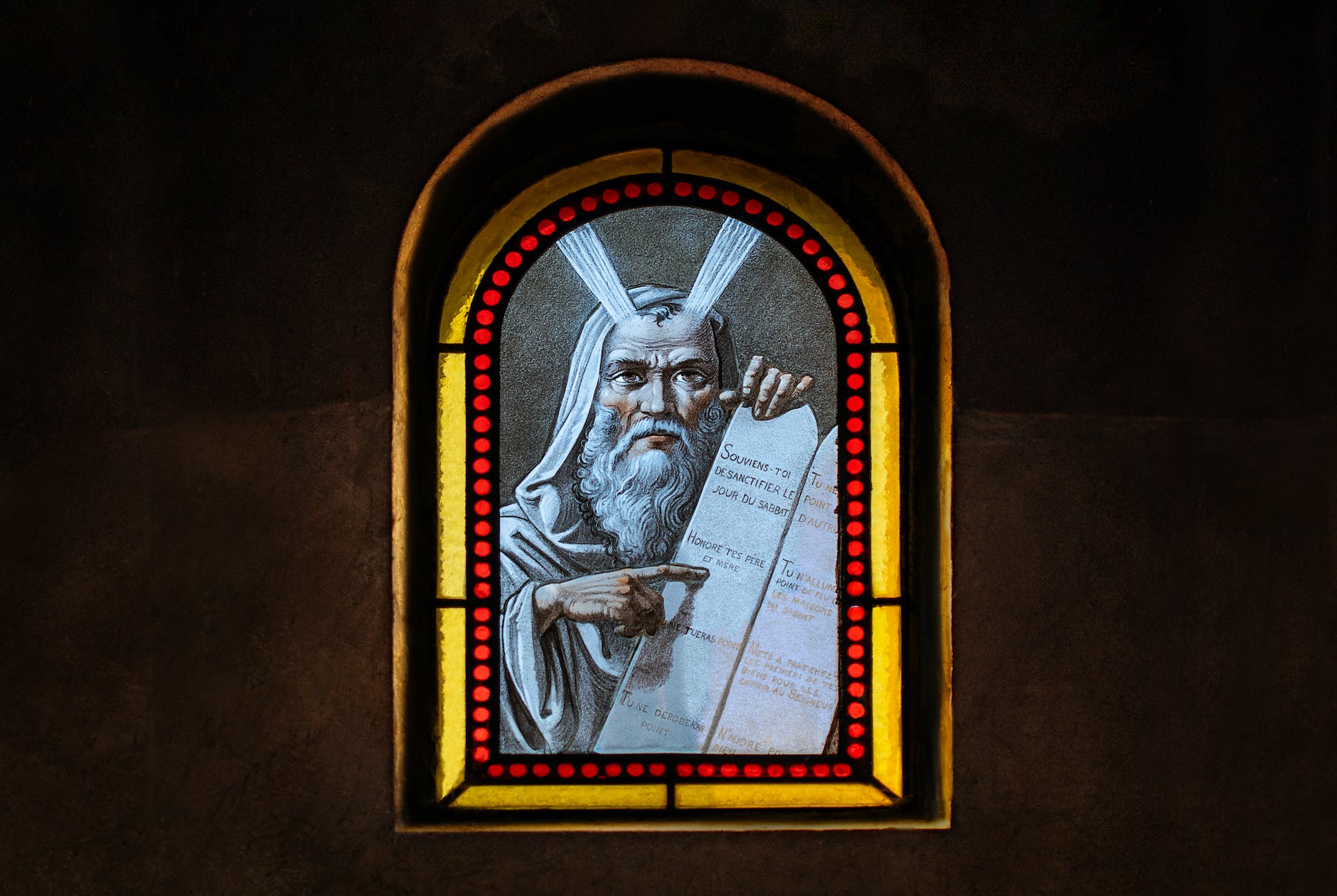

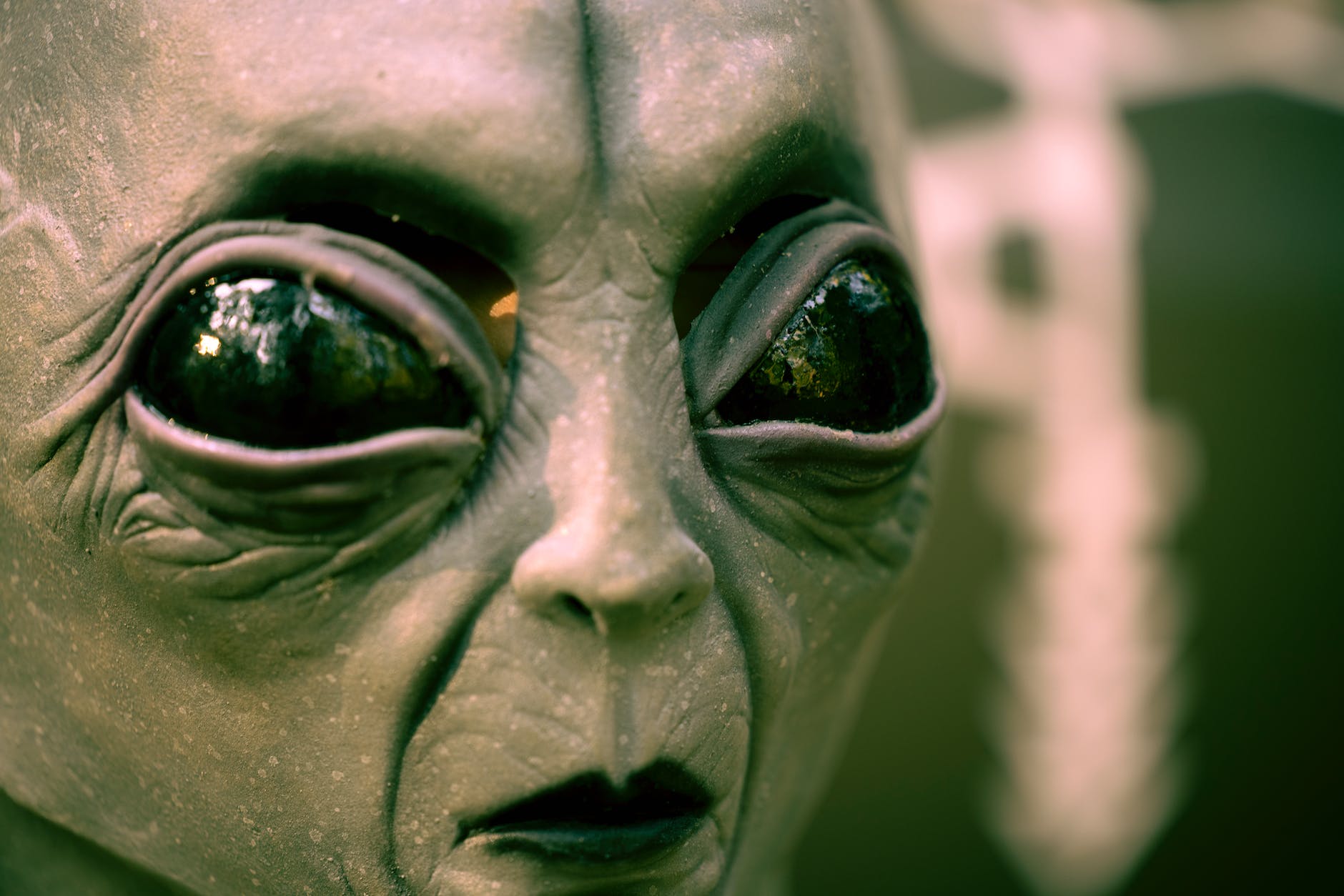


 Faith, Science & Reason